On this page
- Start here: supplements aren't first-line for insomnia
- The ranking at a glance
- 1. Melatonin: best for body-clock problems
- 2. Magnesium: modest and uncertain
- 3. L-theanine: small benefits in early research
- 4. Glycine: interesting but thin
- 5. Valerian: popular, but unproven for insomnia
- 6. Tart cherry: the weakest evidence
- How to choose a sleep supplement
- The bottom line
Key takeaways
- Cognitive behavioral therapy for insomnia (CBT-I) is the recommended first treatment for chronic insomnia; supplements are at best a modest add-on.
- Melatonin has the strongest evidence, mainly for body-clock problems such as jet lag; for insomnia it shortens time to fall asleep by only about 7 minutes on average.
- Low melatonin doses (0.5–3 mg) are often enough, and timing matters as much as dose.
- Melatonin labels are unreliable: gummies in one U.S. study contained 74% to 347% of the labeled dose, and pediatric poisonings have risen sharply.
- Magnesium, L-theanine and glycine have small, early-stage evidence; valerian and tart cherry have the weakest.
- Keep melatonin, especially gummies, out of children's reach, and talk to a pediatric clinician before giving any sleep supplement to a child.
When you're awake at 2 a.m., the supplement aisle can look like a menu of easy fixes. A few products have solid evidence for specific sleep problems, but most offer small or unproven effects. This guide ranks the most popular sleep supplements by the strength of their research, explains how to dose and time melatonin, and flags the safety issues that matter most, especially for children.
Start here: supplements aren't first-line for insomnia
For chronic insomnia, the American College of Physicians recommends cognitive behavioral therapy for insomnia (CBT-I) as the initial treatment for all adults, a strong recommendation based on moderate-quality evidence [1]. CBT-I is a structured program, delivered in person or digitally, that retrains sleep habits, schedules and the thoughts that keep you awake.
The American Academy of Sleep Medicine (AASM) addresses supplements directly: it suggests that clinicians not use melatonin, valerian or tryptophan to treat chronic insomnia in adults, and it makes the same suggestion for the over-the-counter antihistamine diphenhydramine [2]. These are "weak" recommendations, meaning the evidence is limited and uncertain, not that the products have been proven useless or harmful [2].
None of that means supplements are useless. Some help with specific problems, particularly body-clock timing. It does mean you should match the tool to the problem, and see a clinician if poor sleep lasts for weeks, or if you snore loudly, stop breathing during sleep, or feel very sleepy during the day.
The ranking at a glance
The table below reflects the Nutrition Reviews editorial team's reading of the evidence cited in this guide. "Strength of evidence" refers to the best-supported use, not every claim on a label.
| Rank | Option | Doses studied | Best-supported use | Strength of evidence | Main caveats |
|---|---|---|---|---|---|
| Benchmark | CBT-I (not a supplement) | Structured therapy | Chronic insomnia | Strong; recommended first-line [1] | Takes several weeks and requires access to a program |
| 1 | Melatonin | 0.5–5 mg (jet lag) [6]; 0.3–3 mg (older adults) [4] | Jet lag; delayed sleep timing [5, 6] | Moderate to strong for body-clock problems; weak for insomnia [2, 3] | Inaccurate labels; child poisonings [7, 8, 9] |
| 2 | Magnesium | 250 mg elemental per day in a 2025 trial [13] | Mild insomnia symptoms | Low [12, 13] | Supplemental upper limit 350 mg/day; digestive side effects [14] |
| 3 | L-theanine | 200 mg per day in a key trial [18] | Subjective sleep quality | Low [17] | Few trials of L-theanine alone [17] |
| 4 | Glycine | 3 g before bed [15] | Next-day fatigue after short sleep | Low [16] | Small studies with high risk of bias [16] |
| 5 | Valerian | Varies widely between products | Subjective sleep quality at best | Very low [19] | No proven effect on insomnia [2, 19] |
| 6 | Tart cherry | 240 mL of juice twice daily [20] | Total sleep time in a pilot study | Very low [20] | Eight completers in the key trial; juice adds sugar |
1. Melatonin: best for body-clock problems
Melatonin is a hormone your brain releases in the evening to signal darkness to the body's internal clock. In the U.S. it's sold as a dietary supplement, while in several other countries it is available only by prescription and regulated as a drug [9].
For insomnia, the effect is small
A meta-analysis of 19 trials involving 1,683 people with primary sleep disorders found that melatonin helped people fall asleep about 7 minutes faster and sleep about 8 minutes longer, with a modest improvement in overall sleep quality. The benefit didn't appear to wear off with continued use [3]. That is real but small, which is why sleep medicine guidelines don't recommend melatonin for chronic insomnia [2].
For jet lag, it's one of the best-supported options
A Cochrane review found that in nine of ten trials, melatonin taken close to the target bedtime at the destination (10 p.m. to midnight) reduced jet lag after flights crossing five or more time zones. Doses from 0.5 to 5 mg were similarly effective, although people fell asleep faster and slept better with 5 mg than with 0.5 mg, and doses above 5 mg worked no better. Timing was crucial: taken at the wrong time, early in the day, melatonin caused sleepiness and delayed adaptation to local time [6].
For "night owls" with delayed sleep timing
In people diagnosed with delayed sleep-wake phase disorder, who can't fall asleep until very late, 0.5 mg of melatonin taken one hour before the desired bedtime, combined with a fixed sleep schedule, moved sleep onset 34 minutes earlier than placebo over four weeks [5].
Dose: less is often more
Higher doses aren't necessarily better. In adults over 50 with insomnia, a 0.3 mg dose restored sleep efficiency and brought nighttime melatonin levels back to normal; 3 mg also improved sleep but lowered body temperature and kept blood melatonin elevated into the daytime. People who already slept normally didn't benefit from any dose [4]. Research also shows that as little as 0.1 to 0.3 mg can raise blood levels into the normal nighttime range in young adults [8].
| Goal | Doses studied | When to take it |
|---|---|---|
| Jet lag (5+ time zones, especially eastward) | 0.5–5 mg [6] | Close to your target bedtime at the destination, about 10 p.m. to midnight local time [6] |
| Delayed sleep timing ("night owl" pattern) | 0.5 mg [5] | One hour before your desired bedtime, with a fixed sleep schedule [5] |
| Trouble falling asleep | 0.3–3 mg [4] | About 30 minutes before bedtime in the trial; expect a small effect [3, 4] |
Pro tip: For body-clock problems, the clock time you take melatonin matters as much as the dose. Taken at the wrong time of day, it can cause daytime sleepiness and slow your adjustment [6].
What's actually in the bottle
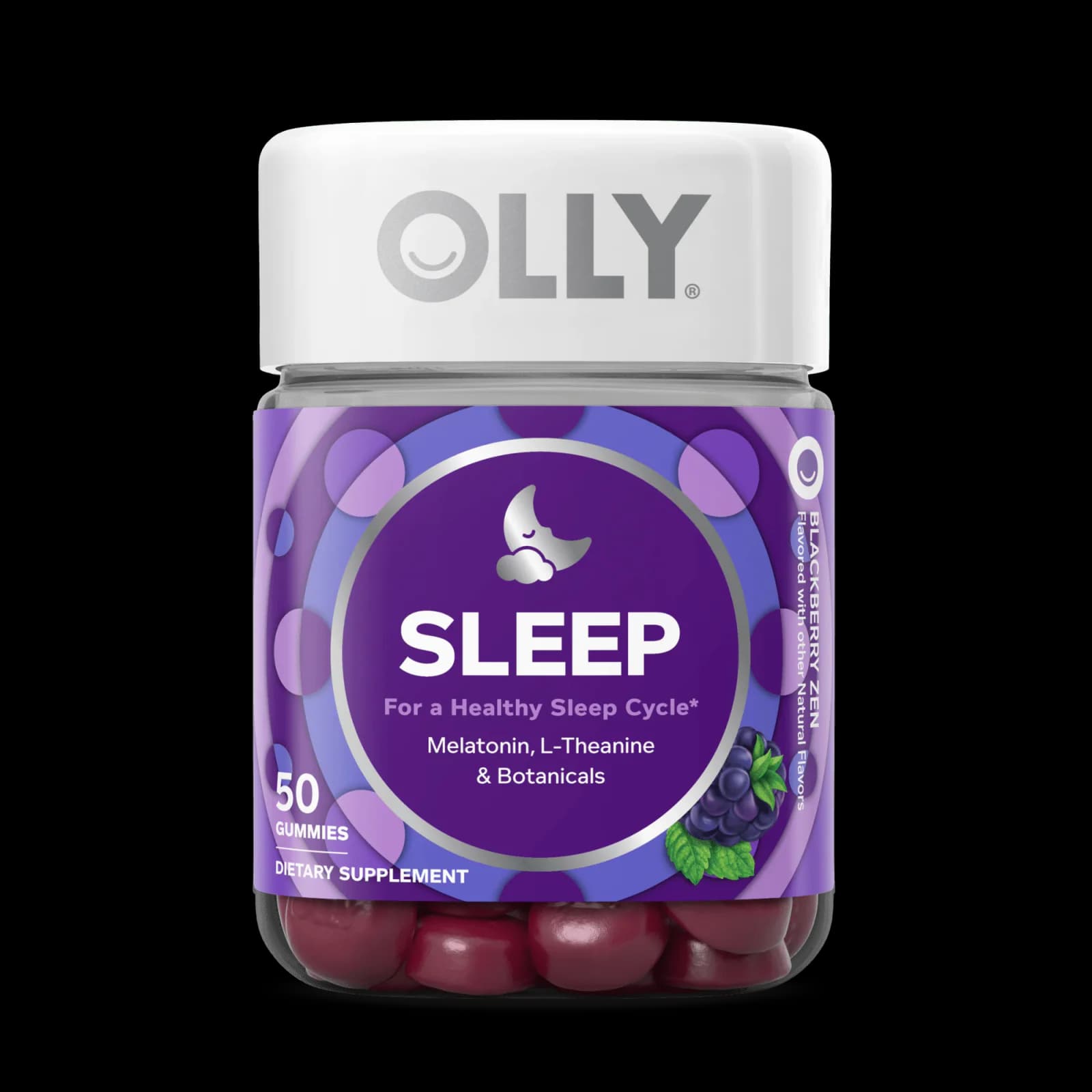
Melatonin labels are notoriously unreliable. A Canadian analysis of 31 supplements found melatonin content ranging from 17% to 478% of the amount on the label; more than 71% missed their label claim by over 10%, and 26% contained serotonin [7, 8]. A 2023 U.S. study of 25 melatonin gummy products found that 22 were inaccurately labeled, with actual melatonin ranging from 74% to 347% of the stated amount, and some products also contained CBD [8]. One of the 25 products contained no detectable melatonin at all [9].
Safety for adults
Short-term studies report only mild side effects, including headache, dizziness, nausea and sleepiness; long-term effects are unclear [9]. The Cochrane jet lag review noted case reports suggesting that people with epilepsy and those taking warfarin may be harmed by melatonin [6], so check with your clinician if either applies to you.
You may also have seen headlines about melatonin and heart failure. A large electronic health record study presented at the American Heart Association's 2025 meeting reported that long-term melatonin use in adults with insomnia was associated with heart failure. Observational data like these are especially prone to confounding, since people who use melatonin often have worse sleep, depression or other health problems, and a 2026 analysis of national survey data found no significant association between recent melatonin use and heart failure or cardiovascular disease [11]. Harm hasn't been established, but it is a good reason not to take melatonin nightly for months without discussing it with a clinician.
Children and gummies: a real concern
Reports to U.S. poison control centers about melatonin ingestion by young people aged 19 and under rose from 8,337 in 2012 to 52,563 in 2021. Over that decade, 4,097 were hospitalized, 287 needed intensive care and five required mechanical ventilation; two children under age 2 died, although the data couldn't confirm whether melatonin caused those deaths [9]. The CDC estimated about 11,000 emergency department visits between 2019 and 2022 for unsupervised melatonin ingestion by children aged 5 and under, many involving flavored products such as gummies [9]. The authors of the gummy study calculated that children taking gummies as directed could receive 40 to 130 times the minimal effective dose [8].
The American Academy of Sleep Medicine advises that melatonin be handled like any other medication and kept out of children's reach, that parents talk with a pediatric healthcare professional before using it, that many children's sleep problems are better managed by changing schedules, habits or behaviors, and that parents who use melatonin choose a product with the USP Verified Mark [10].
Safety note: Store melatonin, especially gummies, up high and out of sight, in child-resistant packaging when available. If a child swallows melatonin, contact Poison Control (1-800-222-1222 in the U.S.) or seek medical care.
2. Magnesium: modest and uncertain
Magnesium is often marketed as the "relaxation mineral," but the sleep evidence is thin. A meta-analysis of three small trials in 151 older adults found that magnesium shortened the time to fall asleep by about 17 minutes compared with placebo; total sleep time increased by about 16 minutes, but that change was not statistically significant, and all three trials had moderate to high risk of bias [12].
A 2025 trial gave 155 adults who reported poor sleep either 250 mg of elemental magnesium as magnesium bisglycinate or a placebo for four weeks. Insomnia severity scores improved slightly more with magnesium (a reduction of 3.9 points vs 2.3 points), a small effect. Exploratory analyses hinted at greater benefit in people with low dietary magnesium intake [13].
Supplement labels list elemental magnesium, and forms that dissolve well, such as citrate, chloride, aspartate and lactate, tend to be better absorbed than magnesium oxide [14]. The tolerable upper intake level for supplemental magnesium is 350 mg per day for adults; high doses can cause diarrhea, nausea and cramping, and the risk of toxicity rises with impaired kidney function [14].
3. L-theanine: small benefits in early research
L-theanine is an amino acid found in tea. A 2025 meta-analysis of 19 articles with 897 participants found small improvements in how long people felt it took to fall asleep, in daytime functioning and in overall self-rated sleep quality. The authors noted a lack of studies testing L-theanine on its own rather than in combination products [17]. In one frequently cited trial, 30 adults took 200 mg per day for four weeks and reported better sleep quality scores, including shorter time to fall asleep; the tablets were supplied by an L-theanine manufacturer whose employees co-authored the study [18].
4. Glycine: interesting but thin
Glycine is an amino acid whose sleep research consists mostly of small, short trials. In one, healthy volunteers whose sleep was restricted for three nights took 3 g of glycine before bed; the next day they reported less fatigue and performed better on a reaction-time test, with a trend toward less sleepiness [15]. A 2024 systematic review found that glycine improved sleep in healthy people in several studies, but the studies had small sample sizes and a high risk of bias [16].
5. Valerian: popular, but unproven for insomnia
Valerian root is one of the most widely used herbal sleep aids [19], yet an umbrella review of eight systematic reviews concluded in 2024 that it has a good safety profile but no evidence of efficacy for treating insomnia. At most, some people report subjectively better sleep, an effect not confirmed by objective measurements [19]. The AASM suggests against valerian for chronic insomnia [2].
6. Tart cherry: the weakest evidence
Tart cherry juice is often promoted as a natural sleep aid. In a pilot crossover study, 11 adults over 50 with insomnia were randomized, three were excluded for sleep apnea, and the eight who completed the study slept 84 minutes longer on laboratory sleep testing after drinking 240 mL twice daily for two weeks. The trial was partly funded by a cherry industry group [20]. That is too small to rely on, and juice adds sugar and calories to your evening.
You may also see ashwagandha marketed for sleep; we cover its evidence and safety in a separate ashwagandha guide.
How to choose a sleep supplement
- Name the problem first. Jet lag and a delayed body clock respond to well-timed melatonin. Chronic insomnia calls for CBT-I [1]. Loud snoring, gasping at night or unrefreshing sleep can signal a condition such as sleep apnea that needs medical evaluation, not a supplement.
- Prefer single-ingredient products. Multi-ingredient "sleep blends" make it hard to know what you're taking or what works, and some melatonin gummies also contain CBD [8].
- Look for independent verification. Given how often melatonin labels are wrong [7, 8], choose products with a third-party seal such as the USP Verified Mark [10].
- Start low and time it right. For melatonin, 0.5 to 1 mg is a reasonable starting range for adults, taken at the time that matches your goal [4, 5, 6].
- Check your health and medications. Ask a clinician first if you take warfarin or have epilepsy (melatonin) [6], or have kidney disease (magnesium) [14], or if you are pregnant or breastfeeding.
- Protect children. Buy child-resistant packaging, avoid keeping candy-like gummies where kids can reach them, and don't give children any sleep supplement without professional advice [10].
- Set a trial period. Keep a simple sleep diary for two weeks before and after starting. If you see no meaningful change, stop.
The bottom line
No sleep supplement matches CBT-I for chronic insomnia, which is the recommended first treatment. Melatonin earns the top spot among supplements, but mainly for jet lag and delayed body clocks, where low doses taken at the right time work well; for ordinary insomnia, its effect is only a few minutes. Magnesium, L-theanine and glycine have small, early evidence and are reasonable to try cautiously. Valerian and tart cherry have the weakest support. Because melatonin labels are often inaccurate and child poisonings have climbed, buy verified products, use the lowest effective dose, and store every sleep aid like medicine.
This article is for general information and isn’t medical advice. Supplements can interact with medications and conditions — talk to a qualified healthcare professional before starting one. Medical disclaimer.
Frequently asked questions
What is the best dose of melatonin?
When should I take melatonin for jet lag?
Is it safe to take melatonin every night?
Can I give melatonin to my child?
Which form of magnesium is best for sleep?
References
- [1]Management of Chronic Insomnia Disorder in Adults: A Clinical Practice Guideline From the American College of PhysiciansAnnals of Internal Medicine (2016)
- [2]Clinical Practice Guideline for the Pharmacologic Treatment of Chronic Insomnia in Adults: An American Academy of Sleep Medicine Clinical Practice GuidelineJournal of Clinical Sleep Medicine (2017)
- [3]Meta-analysis: melatonin for the treatment of primary sleep disordersPLOS ONE (2013)
- [4]Melatonin treatment for age-related insomniaJournal of Clinical Endocrinology & Metabolism (2001)
- [5]Efficacy of melatonin with behavioural sleep-wake scheduling for delayed sleep-wake phase disorder: A double-blind, randomised clinical trialPLOS Medicine (2018)
- [6]Melatonin for the prevention and treatment of jet lagCochrane Database of Systematic Reviews (2002)
- [7]Melatonin Natural Health Products and Supplements: Presence of Serotonin and Significant Variability of Melatonin ContentJournal of Clinical Sleep Medicine (2017)
- [8]Quantity of Melatonin and CBD in Melatonin Gummies Sold in the USJAMA (2023)
- [9]Melatonin: What You Need To KnowNational Center for Complementary and Integrative Health (updated 2024)
- [10]Health Advisory: Melatonin Use in Children and AdolescentsAmerican Academy of Sleep Medicine (2022)
- [11]Melatonin and cardiovascular risk: an NHANES reality check after recent heart failure concernsOpen Heart (2026)
- [12]Oral magnesium supplementation for insomnia in older adults: a Systematic Review & Meta-AnalysisBMC Complementary Medicine and Therapies (2021)
- [13]Magnesium Bisglycinate Supplementation in Healthy Adults Reporting Poor Sleep: A Randomized, Placebo-Controlled TrialNature and Science of Sleep (2025)
- [14]Magnesium: Fact Sheet for Health ProfessionalsNIH Office of Dietary Supplements (updated 2026)
- [15]The effects of glycine on subjective daytime performance in partially sleep-restricted healthy volunteersFrontiers in Neurology (2012)
- [16]The effect of glycine administration on the characteristics of physiological systems in human adults: A systematic reviewGeroScience (2024)
- [17]The effects of L-theanine consumption on sleep outcomes: A systematic review and meta-analysisSleep Medicine Reviews (2025)
- [18]Effects of L-Theanine Administration on Stress-Related Symptoms and Cognitive Functions in Healthy Adults: A Randomized Controlled TrialNutrients (2019)
- [19]Does valerian work for insomnia? An umbrella review of the evidenceEuropean Neuropsychopharmacology (2024)
- [20]Pilot Study of the Tart Cherry Juice for the Treatment of Insomnia and Investigation of MechanismsAmerican Journal of Therapeutics (2018)