On this page
- What collagen supplements actually are
- Skin: promising results with a big asterisk
- Joints: modest, mostly short-term relief
- Hair and nails: the weakest evidence
- Collagen as a protein source: useful but incomplete
- How much to take
- Bovine, marine or something else?
- Safety and contaminants
- How to choose a quality collagen product
- The bottom line
Key takeaways
- Most collagen supplements are hydrolyzed collagen peptides; clinical trials have generally used about 2.5–15 g per day.
- Pooled trials show modest gains in skin hydration and elasticity, but a 2025 meta-analysis found no benefit in trials without industry funding or in high-quality trials.
- For joints, collagen may ease osteoarthritis and activity-related pain in the short term; long-term benefit is unproven.
- Evidence for hair is essentially absent, and the nail data come from one small study without a placebo group.
- Collagen lacks tryptophan, so it complements but should not replace complete proteins such as dairy, eggs, soy or whey.
- Choose third-party-tested products with contaminant testing, and skip marine collagen if you have a fish allergy.
Collagen powders promise firmer skin, easier joints and thicker hair, all from a scoop stirred into your morning coffee. The research behind them is more substantial than many skeptics assume, and weaker than the marketing implies. Here is what the trials actually tested, which results hold up once you look at who paid for them, how much people took, and how to pick a product worth your money.
What collagen supplements actually are
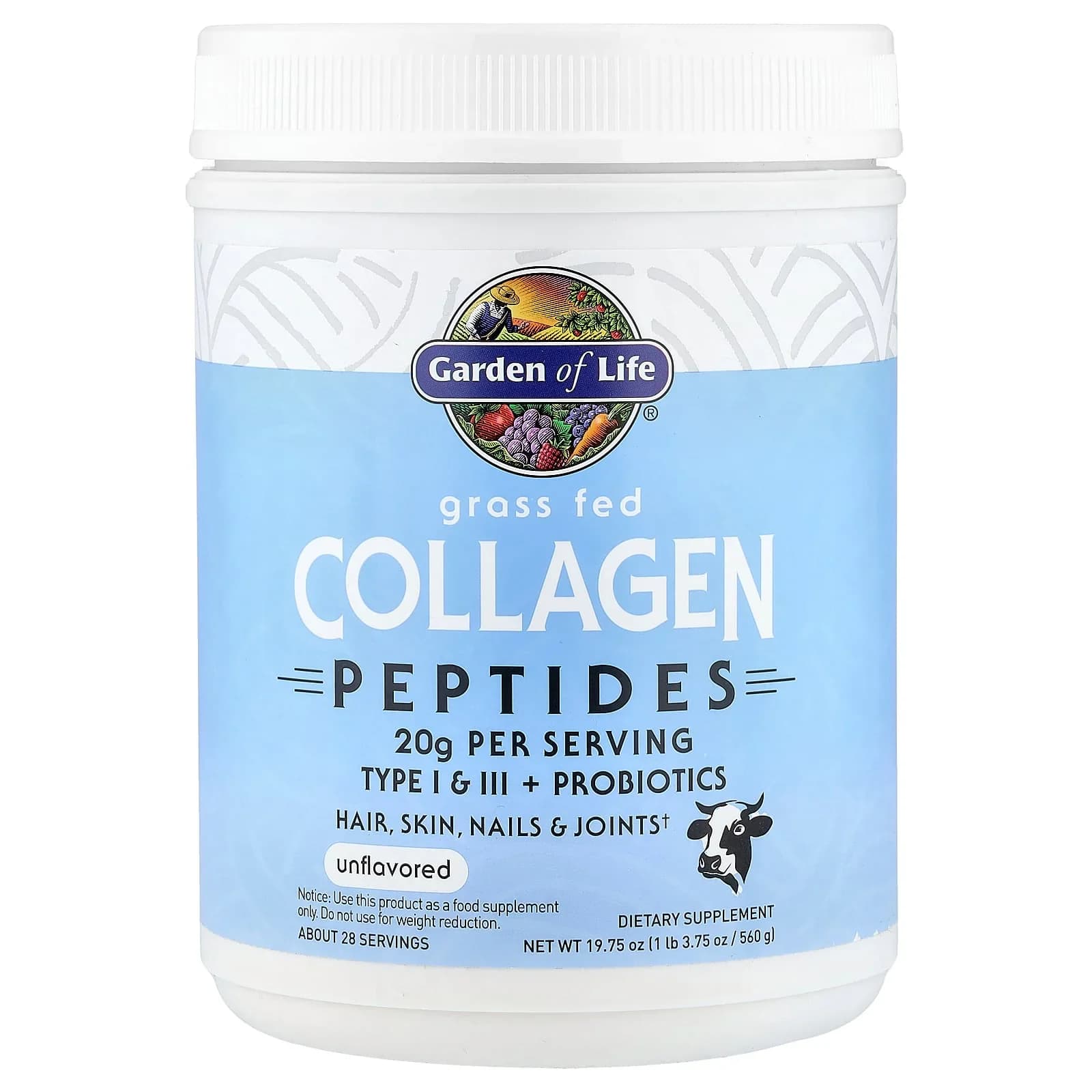
Collagen is the main structural protein in skin, tendons, cartilage and bone. Supplements are made from animal by-products such as cattle bones and tendons, pig skin, and fish skin, scales and bones [1]. The raw material is broken down, typically with enzymes, into short chains that labels call hydrolyzed collagen or collagen peptides [1]. These peptides have a low molecular weight, roughly 3 to 6 kDa [1], which helps explain why a scoop dissolves into coffee instead of setting like gelatin.
Labels often advertise collagen "types" (I, II, III and so on). For hydrolyzed peptides this matters less than the marketing suggests, because the protein has already been broken down before you swallow it. The notable exception is undenatured type II collagen (often sold as UC-II), a separate product taken in milligram rather than gram doses [13].
Does collagen survive digestion?
Most of what you swallow is digested into amino acids, like any other protein. Some small fragments do reach the bloodstream intact, though: after volunteers ingested gelatin hydrolysates, the dipeptide prolyl-hydroxyproline (Pro-Hyp) rose in their blood and peaked within one to two hours [2]. Absorption alone doesn't prove that eaten collagen rebuilds your skin or cartilage. That is the question the clinical trials below try to answer.
Skin: promising results with a big asterisk
Skin is where collagen has the most research. A 2021 meta-analysis pooled 19 randomized, double-blind trials with 1,125 participants (95% of them women) and found improvements in skin hydration, elasticity and wrinkles compared with placebo, with the authors pointing to about 90 days of use [4]. A 2023 analysis of 26 trials and 1,721 participants reached similar conclusions for hydration and elasticity, while noting several sources of bias in the included studies [5].
A frequently cited example comes from Germany: 69 women aged 35 to 55 took 2.5 g or 5 g of specific collagen peptides, or a placebo, every day for eight weeks. Both doses improved skin elasticity, while changes in skin moisture did not reach statistical significance [7].
Who paid for the research?
In 2025, a meta-analysis of 23 trials (1,474 participants) did something earlier reviews had not: it split the results by funding source and study quality. Pooled together, the trials suggested collagen improved hydration, elasticity and wrinkles. But trials without pharmaceutical-industry funding showed no effect on any of those outcomes, and neither did the high-quality trials. Benefits appeared only in the industry-funded studies and, for elasticity, in the lower-quality ones [6]. The authors concluded that there is currently no clinical evidence to support collagen for preventing or treating skin aging [6].
Industry funding is common in supplement research and doesn't automatically invalidate a study. But when the benefit disappears in independent, well-designed trials, the honest conclusion is that any effect on skin is uncertain and probably small.
Bottom line on skin: Expect subtle changes at best, and only after 8 to 12 weeks of daily use. If you try collagen for skin, take photos in the same light at the start and after three months, and stop if you can't see a difference.
Joints: modest, mostly short-term relief
Osteoarthritis
A 2025 meta-analysis of 11 randomized trials involving 870 people with knee osteoarthritis found that collagen-based supplements improved pain and function scores compared with placebo, although results varied considerably from study to study [10]. An earlier review of 20 different supplements for osteoarthritis placed collagen hydrolysate among a handful with large, clinically important effects on pain in the short term. It also found that no supplement delivered clinically important pain relief over the long term, and it rated the quality of evidence across supplements as ranging from very low to high [11].
Active people with joint pain
In a 24-week trial at Penn State, varsity and club athletes with activity-related joint pain took 10 g of collagen hydrolysate or a placebo each day. The collagen group reported larger reductions in pain when walking, standing, resting and lifting, although only 97 of the 147 people enrolled could be included in the analysis [12].
Undenatured type II collagen
UC-II is a different product with a different dose: about 40 mg per day, compared with several grams for peptides. In a 180-day trial of 191 adults with knee osteoarthritis, 40 mg daily improved scores on a standard osteoarthritis index more than placebo and more than a glucosamine-plus-chondroitin combination [13]. Because the two products are dosed and studied so differently, results for one can't be applied to the other.
Tendons and training
For healthy, active adults, a 2024 meta-analysis of 19 studies found that collagen peptides combined with long-term training improved fat-free mass (moderate certainty of evidence) and tendon structure (very low certainty) more than training alone [15].
Pro tip: If joint pain is limiting your daily life, get it assessed before reaching for a supplement. Collagen may take the edge off activity-related aches for some people, but it isn't a substitute for a diagnosis or a treatment plan.
Hair and nails: the weakest evidence
Hair claims are the least supported. We found no rigorous placebo-controlled trials showing that collagen alone improves hair growth, and a 2023 JAMA Dermatology systematic review of 30 studies on nutritional supplements for hair loss did not list collagen among the interventions with the strongest evidence [9]. Because hair shedding can have medical causes that need proper evaluation, persistent thinning is worth a visit to a dermatologist.
For nails, a single small study gave 25 people with brittle nails 2.5 g of collagen peptides daily for 24 weeks. Nail growth increased by 12% and the frequency of broken nails fell by 42% [8]. However, there was no placebo group, so the results can't separate the supplement from the effects of time, seasons or expectation.
Collagen as a protein source: useful but incomplete
Collagen contains no tryptophan, one of the nine essential amino acids, so it is classified as an incomplete protein [3]. It still counts toward your protein intake: modeling suggests collagen could make up as much as 36% of daily protein in a typical Western diet while essential amino acid needs are still met [3].
For muscle, though, it is a poor stand-in for complete proteins. In a trial in healthy older women taking 30 g twice daily, whey increased muscle protein synthesis more than collagen did, and over six days collagen did not raise it significantly above baseline [14]. If your goal is building or keeping muscle, rely on complete proteins such as dairy, eggs, soy, meat or whey, and treat collagen as a supplement to them.
How much to take
Trials have generally used between 2.5 and 15 g of collagen peptides per day [3]. Skin studies mostly used 1 to 10 g daily [5], with some reporting results at 2.5 g [7]. The athlete joint trial used 10 g [12], while UC-II studies use about 40 mg [13]. There is no strong evidence that a particular time of day matters; consistency over weeks matters more.
| Goal | Doses used in trials | What the research found | Our confidence |
|---|---|---|---|
| Skin hydration and elasticity | Mostly 1–10 g/day for 8–12 weeks [5] | Modest improvements overall; no effect in independent or high-quality trials [6] | Low |
| Knee osteoarthritis symptoms | Varies by product; 40 mg/day for UC-II [13] | Short-term improvements in pain and function; long-term benefit unproven [10, 11] | Low to moderate |
| Activity-related joint pain | 10 g/day for 24 weeks [12] | Less pain in one athlete trial [12] | Low |
| Muscle and tendons (with training) | Varies; collagen trials range up to 15 g/day [3] | Gains in fat-free mass; tendon findings very uncertain [15] | Low to moderate |
| Brittle nails | 2.5 g/day for 24 weeks [8] | Faster growth, fewer breaks, but no placebo group [8] | Very low |
| Hair growth | Not established | No good trials [9] | Very low |
"Our confidence" is the Nutrition Reviews editorial team's summary of the cited evidence, not a formal grading.
Bovine, marine or something else?
Sources differ more in practical terms than in proven results. In the 2023 meta-analysis, fish-derived collagen showed the strongest effect on skin hydration, but the source made no significant difference for elasticity [5]. There are no long-term head-to-head trials, so choose on diet, allergies and quality rather than marketing.
| Source | Typical raw material | May suit you if… | Watch out for |
|---|---|---|---|
| Bovine | Cattle bones, tendons and other connective tissue [1] | You have no dietary restrictions on beef | Check kosher or halal certification if that matters to you |
| Marine | Fish skin, scales and bones [1] | You avoid mammal products or eat pescatarian | Fish allergy [18]; ask for contaminant testing [16] |
| Porcine | Pig skin [1] | You have no dietary restriction on pork | Not suitable for kosher or halal diets |
| Chicken (UC-II) | Sternum cartilage [13] | You specifically want UC-II for knees | Milligram doses; not interchangeable with peptides |
Safety and contaminants
For most healthy adults, collagen appears well tolerated. In a large review of osteoarthritis supplements, safety outcomes were similar to placebo for all supplements studied except one unrelated product [11]. A few issues are still worth knowing:
- Heavy metals. Collagen comes from animal tissues that can accumulate environmental contaminants. A 2020 screening of 28 collagen products by the Clean Label Project, reported by Consumer Reports, found measurable arsenic in 64%, lead in about a third and cadmium in 17%, mostly at low levels [17]. A 2025 peer-reviewed analysis of marine collagen supplements most often detected arsenic and lead, but no sample exceeded EU limits [16]. Levels vary by brand, which is why testing matters.
- Fish allergy. Fish gelatin is made largely of type I collagen, and some people with fish allergy carry antibodies against it [18]. If you have a fish allergy, avoid marine collagen unless your allergist says otherwise.
- Kidney stones. Collagen is rich in hydroxyproline, which the body can convert to oxalate. When volunteers ate 30 g of gelatin, their urinary oxalate was 43% higher than after the same amount of whey protein [19]. If you have had calcium oxalate stones, discuss collagen with your clinician before using it.
- Diet and ethics. All collagen is animal-derived. A product labeled "vegan collagen" can't contain animal collagen, so read the ingredient list to see what it actually provides.
Safety note: If you are pregnant or breastfeeding, have kidney disease, or take several medications, check with your healthcare professional before adding any supplement, collagen included.
How to choose a quality collagen product
In the U.S., the FDA does not approve dietary supplements for safety and effectiveness before they are sold, and manufacturers are responsible for their own products [20]. That makes independent verification especially useful.
On the label, look for:
- "Hydrolyzed collagen" or "collagen peptides" with the grams per serving clearly stated, ideally in the 2.5 to 10 g range used in trials.
- The source (bovine, marine, porcine or chicken) and, for UC-II, the milligram dose.
- A third-party certification seal from an independent testing program such as NSF, USP or Informed Choice, which indicates that an outside lab has tested the product.
- Contaminant testing. Reputable brands will share heavy-metal results or a certificate of analysis on request.
Red flags:
- Promises to "reverse aging," "regrow hair" or "rebuild cartilage."
- "Proprietary blends" that hide how much collagen each serving contains.
- Capsules or gummies that would require a handful per day to reach a studied dose. Check how many units you'd need before comparing prices.
- Claims that a long list of collagen "types" makes a peptide powder more effective, which hasn't been demonstrated.
Finally, compare cost per effective dose, not per container. A cheaper tub that delivers 10 g per scoop can be better value than a premium blend that delivers 2 g.
The bottom line
Collagen peptides are a reasonable, generally safe supplement with modest and uncertain benefits. For skin, pooled trials look positive, but the effect fades in independent and high-quality studies. For joints, collagen may ease osteoarthritis or activity-related pain in the short term. For hair, there is no good evidence. As a protein, collagen is incomplete and shouldn't replace dairy, eggs, soy, meat or whey for muscle. If you decide to try it, choose a third-party-tested product at a studied dose (about 2.5 to 10 g daily), give it about three months, and judge the results honestly.
This article is for general information and isn’t medical advice. Supplements can interact with medications and conditions — talk to a qualified healthcare professional before starting one. Medical disclaimer.
Frequently asked questions
How long does collagen take to work?
Is marine collagen better than bovine collagen?
Can collagen count toward my daily protein?
Will collagen help my hair grow?
Is it safe to take collagen every day?
References
- [1]Hydrolyzed Collagen—Sources and ApplicationsMolecules (2019)
- [2]Identification of food-derived collagen peptides in human blood after oral ingestion of gelatin hydrolysatesJournal of Agricultural and Food Chemistry (2005)
- [3]Significant Amounts of Functional Collagen Peptides Can Be Incorporated in the Diet While Maintaining Indispensable Amino Acid BalanceNutrients (2019)
- [4]Effects of hydrolyzed collagen supplementation on skin aging: a systematic review and meta-analysisInternational Journal of Dermatology (2021)
- [5]Effects of Oral Collagen for Skin Anti-Aging: A Systematic Review and Meta-AnalysisNutrients (2023)
- [6]Effects of Collagen Supplements on Skin Aging: A Systematic Review and Meta-Analysis of Randomized Controlled TrialsThe American Journal of Medicine (2025)
- [7]Oral supplementation of specific collagen peptides has beneficial effects on human skin physiology: a double-blind, placebo-controlled studySkin Pharmacology and Physiology (2014)
- [8]Oral supplementation with specific bioactive collagen peptides improves nail growth and reduces symptoms of brittle nailsJournal of Cosmetic Dermatology (2017)
- [9]Evaluation of the Safety and Effectiveness of Nutritional Supplements for Treating Hair Loss: A Systematic ReviewJAMA Dermatology (2023)
- [10]Effect of collagen supplementation on knee osteoarthritis: an updated systematic review and meta-analysis of randomised controlled trialsClinical and Experimental Rheumatology (2025)
- [11]Dietary supplements for treating osteoarthritis: a systematic review and meta-analysisBritish Journal of Sports Medicine (2018)
- [12]24-Week study on the use of collagen hydrolysate as a dietary supplement in athletes with activity-related joint painCurrent Medical Research and Opinion (2008)
- [13]Efficacy and tolerability of an undenatured type II collagen supplement in modulating knee osteoarthritis symptoms: a multicenter randomized, double-blind, placebo-controlled studyNutrition Journal (2016)
- [14]Whey protein but not collagen peptides stimulate acute and longer-term muscle protein synthesis with and without resistance exercise in healthy older women: a randomized controlled trialThe American Journal of Clinical Nutrition (2020)
- [15]Impact of Collagen Peptide Supplementation in Combination with Long-Term Physical Training on Strength, Musculotendinous Remodeling, Functional Recovery, and Body Composition in Healthy Adults: A Systematic Review with Meta-analysisSports Medicine (2024)
- [16]Toxic metals and metalloids in collagen supplements of fish and jellyfish origin: Risk assessment for daily intakeOpen Medicine (2025)
- [17]The Real Deal on CollagenConsumer Reports (2020)
- [18]IgE antibody to fish gelatin (type I collagen) in patients with fish allergyJournal of Allergy and Clinical Immunology (2000)
- [19]Hydroxyproline ingestion and urinary oxalate and glycolate excretionKidney International (2006)
- [20]FDA 101: Dietary SupplementsU.S. Food and Drug Administration