On this page
- The short answer
- What you are actually buying in each format
- Caffeine per serving, side by side
- Caffeine per dollar: do the math yourself
- What else comes along for the ride
- How much caffeine do you actually need?
- Why the label on a can and the label on a tub are not the same
- Tolerance, crashes and cycling
- Sleep is the hidden cost
- Safety: who should be careful
- Which format fits which training scenario
- Choosing a quality product
- The bottom line
Key takeaways
- Caffeine is the active ingredient in all three formats — pre-workout powder, energy drinks and tablets — so compare milligrams, not marketing.
- Performance research doses caffeine at roughly 3–6 mg per kilogram of body weight, taken about an hour before training; start at the low end.
- Healthy adults should keep total daily caffeine from all sources under 400 mg; the limit is about 200 mg in pregnancy and breastfeeding.
- Compare value as cost per 100 mg of caffeine: single cans are almost always the most expensive way to buy caffeine, plain tablets the cheapest.
- Disclosing the milligram amount is largely voluntary on US labels, so skip any product that does not state total caffeine per serving.
- Train in the evening? A measured low dose or nothing beats a scoop — pre-workout use is linked with much shorter sleep in people aged 16 to 30.
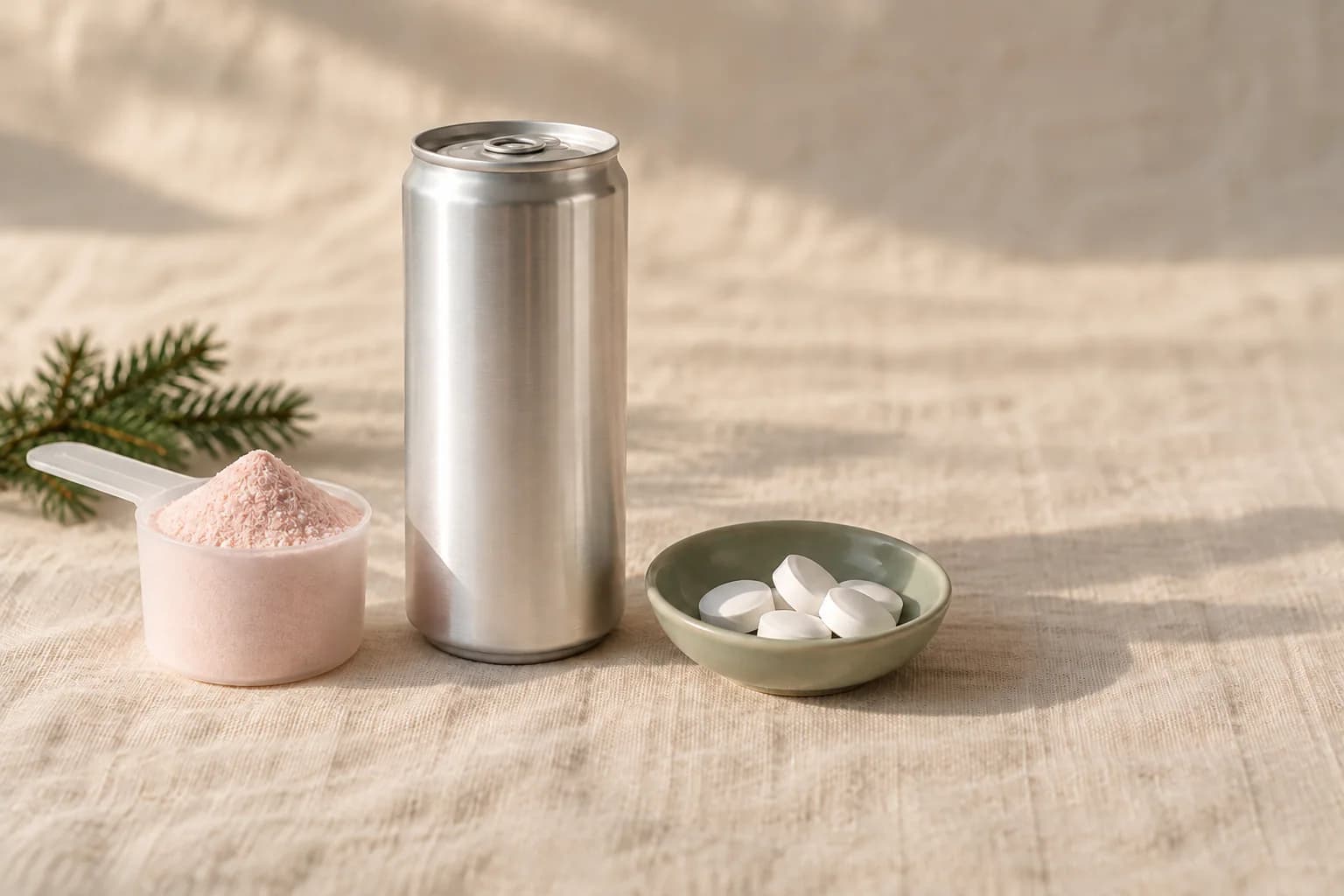
Three products, one active ingredient. A scoop of pre-workout, a can of energy drink and a plain caffeine tablet all do the same core job — they put caffeine into your bloodstream before you train. Where they differ is how precisely you can control the dose, what else rides along with it, what the label is legally required to tell you, and how much you pay per milligram. Here is how the three compare, and how to pick the one that fits your session, your budget and your sleep.
The short answer
Caffeine is the ingredient with the strongest evidence behind all three formats. The International Society of Sports Nutrition concluded that caffeine reliably improves performance at doses of roughly 3–6 mg per kilogram of body mass, with benefits across muscular endurance, strength, sprinting, jumping and throwing — and the most consistent, moderate-to-large effects in aerobic endurance [1].
Crucially for this comparison, the same position stand notes that energy drinks and caffeine-containing pre-workout supplements have both been shown to improve anaerobic and aerobic performance [1]. So the format is not what makes caffeine work. The dose is.
That reframes the buying decision. Instead of asking "is pre-workout better than an energy drink," ask three cheaper questions:
- How many milligrams do I actually want today?
- Can I hit that number accurately with this product?
- What am I paying, and what else am I swallowing, to get it?
Bottom line: A tablet is the cleanest way to hit an exact milligram target, a pre-workout tub is usually the cheapest per milligram and the most variable, and a can is the most convenient and the most likely to carry sugar and extras you did not ask for.
What you are actually buying in each format
Pre-workout powder
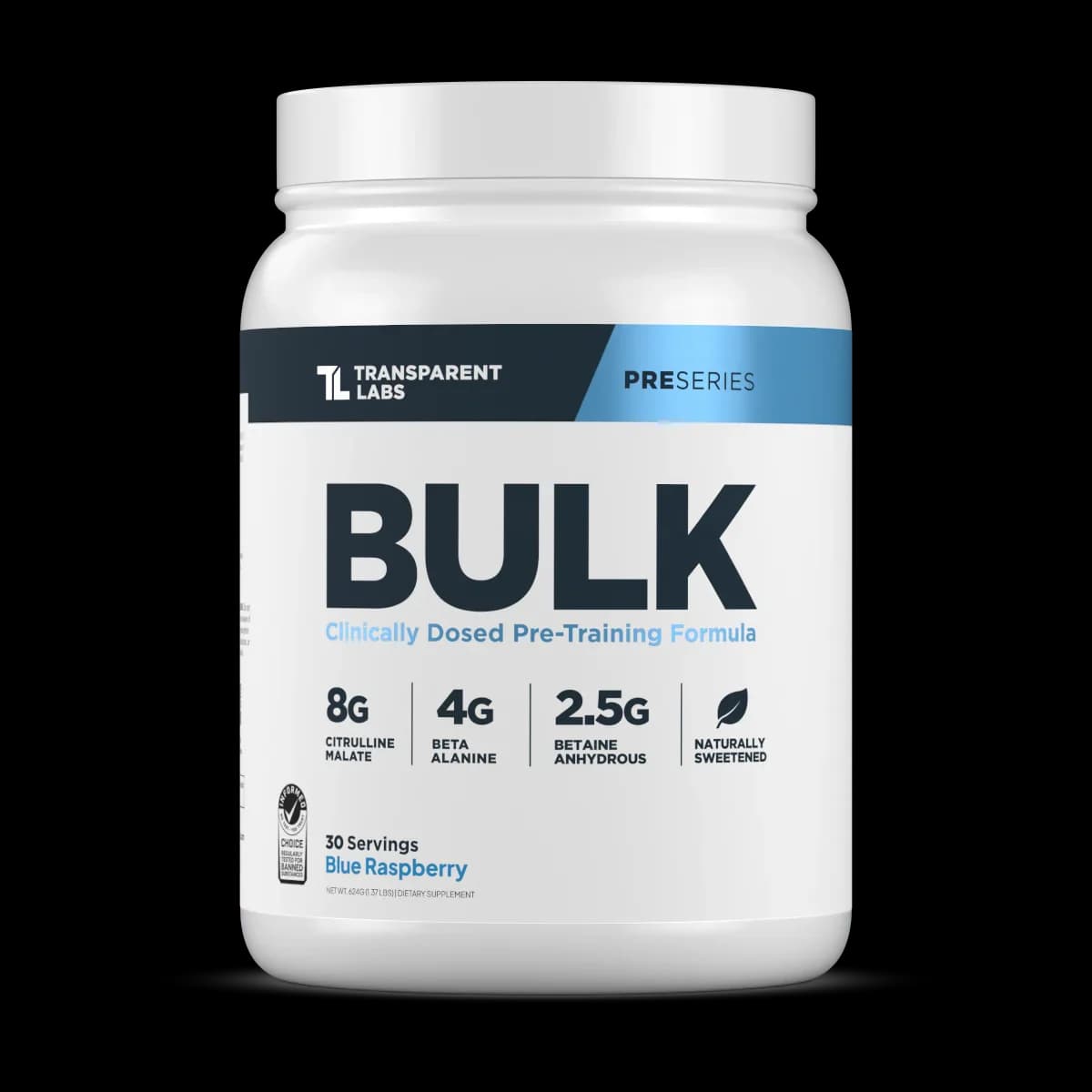
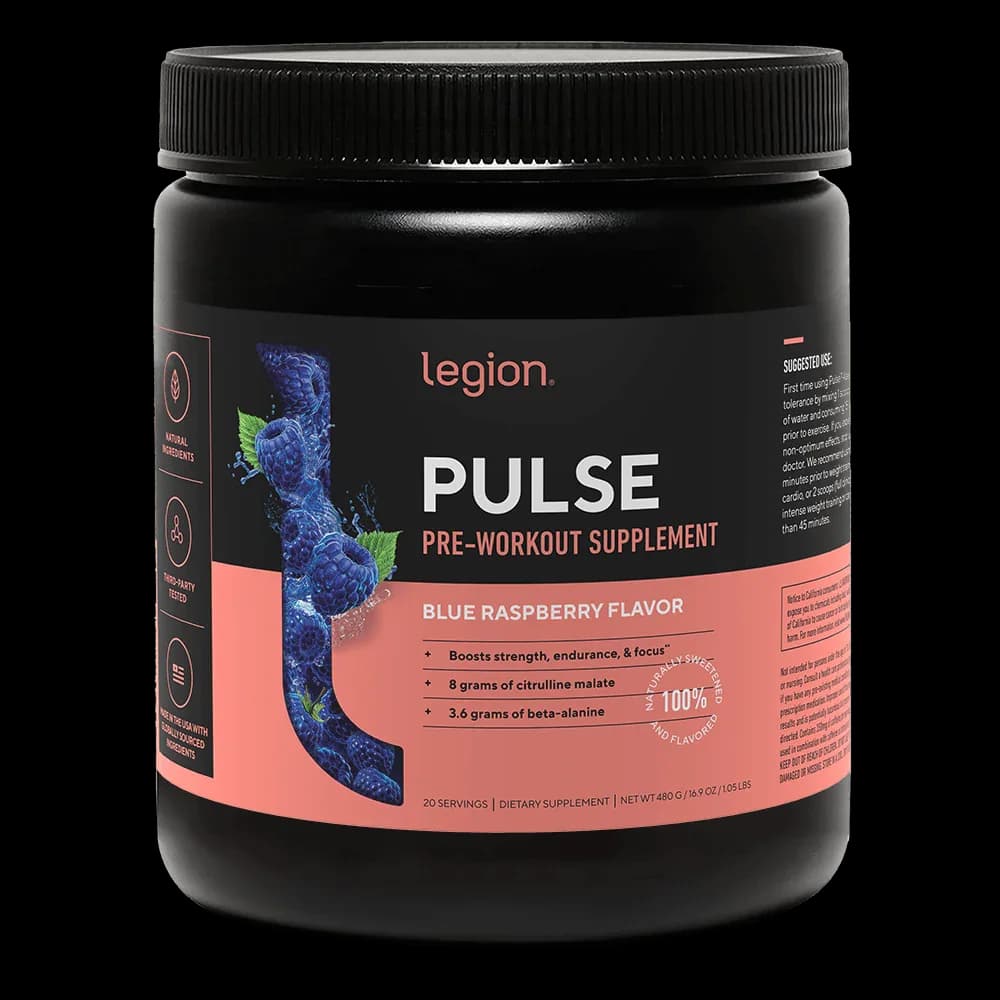
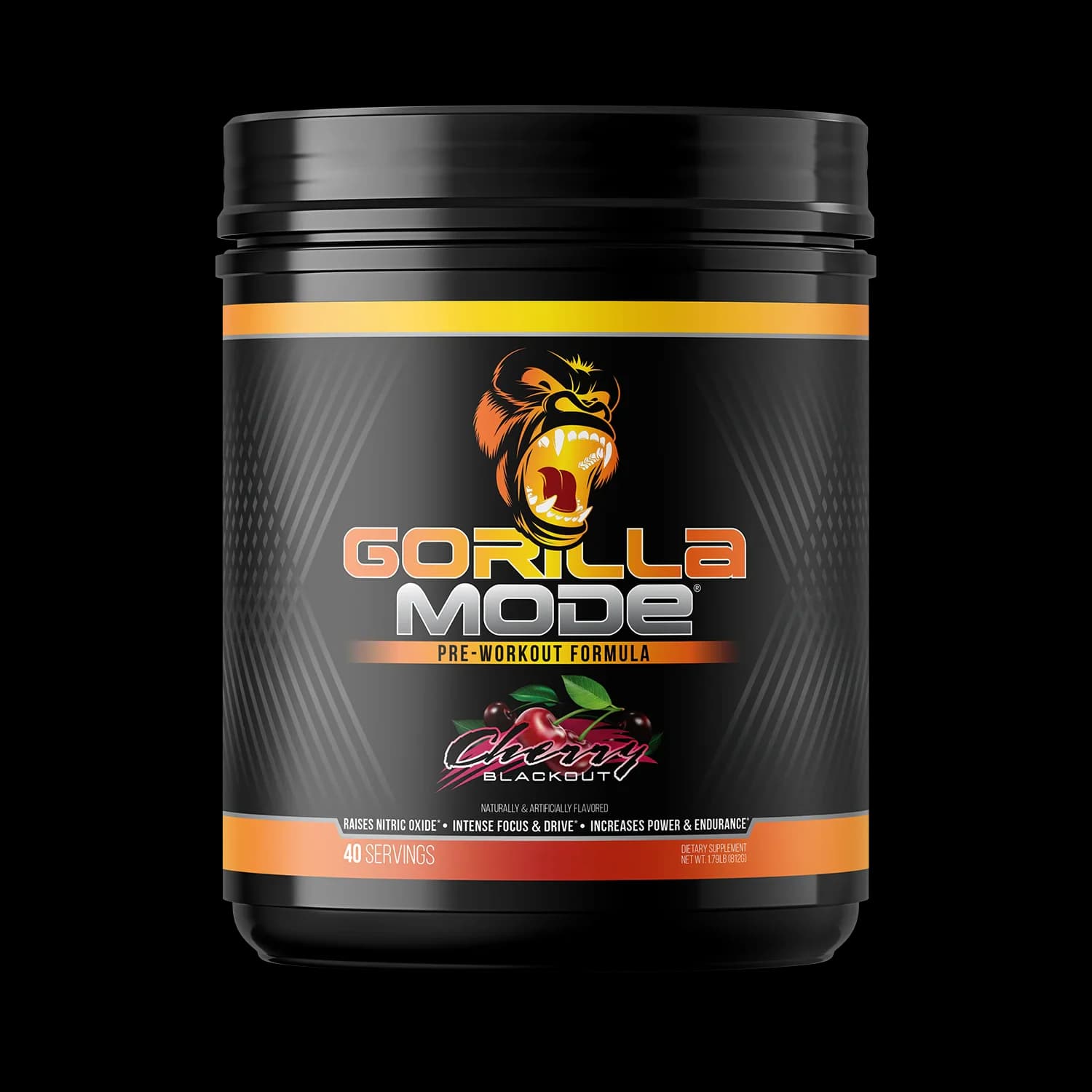
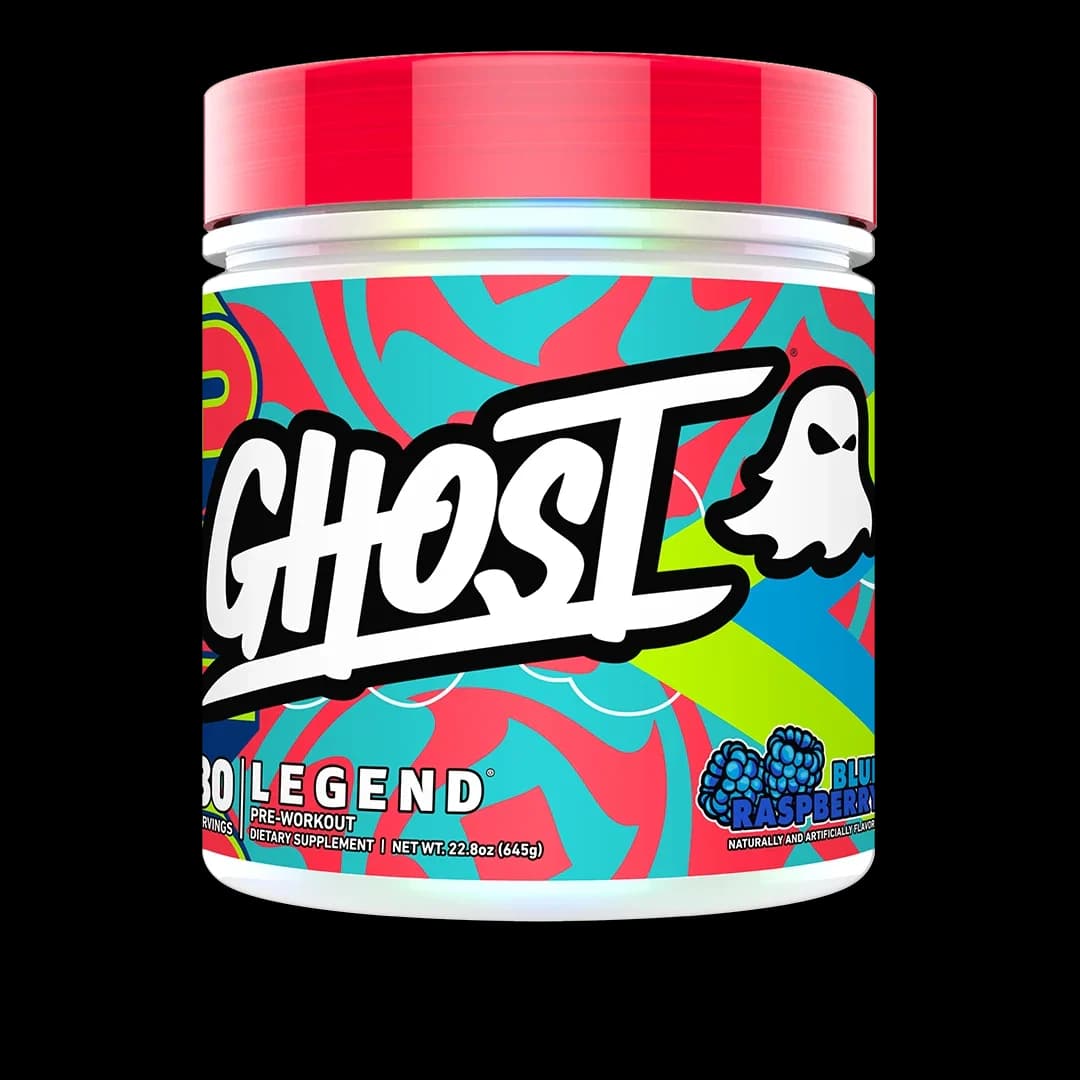
A scoop of pre-workout is a caffeine delivery system wrapped in a flavour system and a list of supporting ingredients. Caffeine content varies widely from brand to brand: researchers studying pre-workout use among 16- to 30-year-olds described products containing anywhere from about 90 mg to more than 350 mg of caffeine per serving [2]. The ISSN similarly notes that caffeine-containing products range from about 1 mg in milk chocolate up to more than 300 mg per serving in some dietary supplements [1].
Scoops are also the least standardised unit in the category. A "serving" can be half a scoop or two scoops depending on the brand, and powder settles in transit, so a heaped scoop and a level one are not the same dose.
Energy drinks
Energy drinks are the convenience option, and the dose range is wide. The FDA reports that energy drinks generally contain 54 to 328 mg of caffeine per 16 fluid ounces, with some brands at 41 to 246 mg per 12 fluid ounces [3]. Mayo Clinic Health System puts the typical range at 100–300 mg per serving, while noting amounts vary [4].
Two things make cans tricky. First, the serving on the label is not always the whole container. Second, many cans deliver caffeine alongside a substantial dose of sugar — one 16-ounce energy drink example cited by Mayo Clinic Health System supplies 210 calories and 47 g of added sugar, roughly a full day's worth under the Dietary Guidelines' recommendation to keep added sugar under 10% of daily calories [4].
Caffeine tablets
A caffeine tablet is the least interesting product in this comparison and, for a lot of people, the most sensible one. It is one ingredient at one stated strength, so your dose is simply the number on the label multiplied by the number of tablets. Most of the caffeine and exercise research is built on exactly this kind of standardised dosing: the ISSN notes that the bulk of the literature has used anhydrous caffeine in capsule form, because it makes dosing and placebos straightforward [1].
Tablets are not the same thing as bulk caffeine powder. The FDA explicitly warns consumers to avoid pure and highly concentrated caffeine sold in bulk powdered and liquid form, noting that a single teaspoon of pure powdered caffeine is roughly equivalent to the caffeine in 28 cups of coffee and that the agency is aware of at least two deaths in otherwise healthy people linked to these products [5].
Safety note: Pre-measured tablets are a different product from bulk powder. Never try to eyeball a caffeine dose from a bag of powder — the difference between a normal serving and a dangerous one is smaller than a kitchen scoop can reliably measure [5].
Caffeine per serving, side by side
| Pre-workout scoop | Energy drink can | Caffeine tablet | |
|---|---|---|---|
| Typical caffeine per serving | ~90 mg to 350+ mg, varies widely by brand [2] | 54–328 mg per 16 fl oz; 41–246 mg per 12 fl oz [3] | Exactly what the label states, per tablet |
| Dose precision | Low to moderate — scoop size, settling, half-scoop servings | Moderate — fixed per can, but check servings per container | High — split or stack tablets to a target |
| What else comes with it | Flavours, sweeteners, amino acids, vitamins, herbal extracts | Often sugar, vitamins, amino acids, herbal extracts [4] | Usually nothing |
| Cost per milligram | Usually the lowest | Usually the highest | Low |
| Label you read | Supplement Facts | Nutrition Facts or Supplement Facts, depending on how it is marketed | Supplement Facts |
| Best at | Flavour, ritual, stacking other actives | Grab-and-go, travel, no mixing | Hitting an exact dose, caffeine-sensitive users, budget |
For context, the FDA puts regular brewed coffee at 113–247 mg per 12 fl oz, black tea at about 71 mg and caffeinated soft drinks at 23–83 mg for the same volume [3]. A strong cup of coffee is squarely inside the performance dose range for many people — worth remembering before you buy anything.
Caffeine per dollar: do the math yourself
Prices move constantly and vary by retailer, so the only honest way to compare cost is to run the numbers on the product in front of you. Two divisions are all you need:
- Cost per serving = total price ÷ servings per container (use the servings number on the label, not the number of scoops you personally take).
- Cost per 100 mg of caffeine = cost per serving ÷ (mg of caffeine per serving ÷ 100).
A worked example with illustrative numbers — substitute your own:
| Format | Example price | Servings | Caffeine per serving | Cost per serving | Cost per 100 mg |
|---|---|---|---|---|---|
| Pre-workout tub | $45.00 | 30 | 300 mg | $1.50 | $0.50 |
| Energy drink (single can) | $3.00 | 1 | 200 mg | $3.00 | $1.50 |
| Energy drink (multipack) | $24.00 | 12 | 200 mg | $2.00 | $1.00 |
| Caffeine tablets | $9.00 | 100 | 200 mg | $0.09 | $0.045 |
Those figures are placeholders, not quoted prices — but the shape of the result holds up whenever you run it. Single cans are almost always the most expensive way to buy caffeine, tubs land in the middle, and plain tablets are in a different league, because you are not paying for water, flavour, packaging or shipping weight.
That does not automatically make tablets the right buy. If flavour is what gets you to the gym, or a cold can is what you reach for on the way to a 6 a.m. session, the extra cost is buying adherence and convenience. Just know what the premium is.
Pro tip: Compare on cost per 100 mg of caffeine, not cost per serving. A "value" tub with 150 mg scoops can be worse value than a smaller tub with 300 mg scoops.
What else comes along for the ride
Sugar
This is the biggest nutritional difference between the formats. Most pre-workouts and all plain caffeine tablets are effectively sugar-free; many energy drinks are not. Because high added-sugar intake contributes to health problems, the Dietary Guidelines for Americans recommend keeping added sugars under 10% of daily calories — about 12 teaspoons on a 2,000-calorie diet — and a single large sweetened energy drink can use up that entire allowance [4]. Zero-sugar versions of most energy drinks exist and remove this issue entirely.
Vitamins, amino acids and herbal extras
Energy drinks commonly add vitamins, minerals and amino acids, and many include herbal ingredients such as ginseng and guarana. Mayo Clinic Health System advises caution with these, since research on their safety and effectiveness is limited and some herbal ingredients can interact with prescription medicines — and makes the broader point that adding vitamins and other substances does not make an energy drink a health product [4].
Guarana matters for a second reason: it is itself a caffeine source. The FDA notes that most energy drinks sold in the US list the total caffeine from all sources, including ingredients like guarana, but when a food contains an ingredient that naturally carries caffeine, the word "caffeine" may not appear in the ingredient list at all [3].
Sprinkle doses of performance ingredients
Pre-workouts win on perceived value because the label lists eight or ten actives. The question is whether each is present at the dose used in research. The tingling many people associate with beta-alanine, for instance, tells you the ingredient is there — not that the serving matches a studied dose, and not that one pre-session scoop does what weeks of consistent intake do. Our guide to pre-workout ingredients that work (and the ones that don't) goes through the actives one by one, and how to read a Supplement Facts label explains how to spot a proprietary blend that hides the individual amounts.
How much caffeine do you actually need?
Performance research doses caffeine by body weight, not by scoop. The ISSN position stand reports consistent performance benefits at 3–6 mg/kg of body mass, says the minimum effective dose is unclear but may be as low as 2 mg/kg, and notes that very high doses such as 9 mg/kg bring a high rate of side effects without extra benefit [1].
| Body weight | 3 mg/kg (low) | 4.5 mg/kg (mid) | 6 mg/kg (high) |
|---|---|---|---|
| 55 kg / 120 lb | 165 mg | 250 mg | 330 mg |
| 70 kg / 155 lb | 210 mg | 315 mg | 420 mg |
| 85 kg / 187 lb | 255 mg | 380 mg | 510 mg |
| 100 kg / 220 lb | 300 mg | 450 mg | 600 mg |
Two practical notes. Start at the bottom of the range, not the middle: the ISSN points out that individual responses differ substantially, partly because of genetic variation in caffeine metabolism and partly because of habitual intake, and that those same differences show up in side effects such as disrupted sleep and anxiety [1]. And watch the top of the table — for a larger lifter, 6 mg/kg alone can approach or exceed the daily caffeine ceiling for adults before you have had a single coffee.
The 400 mg ceiling
For most adults, the FDA has cited 400 mg of caffeine a day — about two to three 12-ounce cups of coffee — as an amount not generally associated with negative effects, while stressing that sensitivity and clearance vary a lot between people [3]. Mayo Clinic Health System summarises the related limits as up to 200 mg a day during pregnancy or breastfeeding, and no established safe level for children [4].
Higher intakes are where problems cluster. Regular use above 400 mg a day is associated with headache, insomnia, nervousness, irritability, fast heartbeat, palpitations, tremors, agitation and gastrointestinal upset, as well as physical and psychological dependence with withdrawal symptoms if you stop abruptly [4]. At the extreme end, the FDA estimates toxic effects such as seizures can occur with rapid consumption of around 1,200 mg of caffeine [3].
Good to know: The 400 mg figure is a daily total from everything — coffee, tea, soft drinks, energy drinks, pre-workout, chocolate, some energy bars and certain over-the-counter medicines all count [3, 4].
Why the label on a can and the label on a tub are not the same
This is the part most buyers get wrong. In the US, the labelling rules for caffeine are narrower than people assume:
- Packaged foods must list caffeine in the ingredient list when it is added as a stand-alone ingredient [3].
- When caffeine comes along inside another ingredient — chocolate, guarana — the ingredient is listed, but "caffeine" may not be [3].
- Disclosing how many milligrams a product contains is largely voluntary. The FDA notes that many packaged foods, beverages and dietary supplements provide the amount voluntarily [3].
- Restaurants and other retail food outlets are not required to tell you the caffeine content of what they serve [3].
- There is no FDA regulation specific to "energy drinks"; the general rules about safe use of ingredients apply [3].
On the supplement side, energy and pre-workout products are not reviewed or approved by the FDA before they go on sale — manufacturers are responsible for safety, good manufacturing practices and truthful labelling [4]. That is why third-party testing matters more here than in almost any other supplement category, and why independent certification programmes are worth paying attention to when a product's whole value proposition is a stimulant dose you cannot verify yourself.
Practical takeaway: buy the formats that put a milligram number on the label, and treat products that do not — or that bury caffeine inside a proprietary "energy blend" — as unknown doses.
Tolerance, crashes and cycling
Daily caffeine use reliably produces adaptation; regular heavy intake also produces dependence and withdrawal symptoms if you stop suddenly, which is why the FDA advises cutting back gradually rather than all at once if you want to reset [3, 4]. The unpleasant day-one headache that makes people conclude they "need" their pre-workout is withdrawal, not a training requirement.
A sensible approach if your dose keeps creeping up:
- Pick a baseline dose you can keep all week and stay under the 400 mg daily total [3].
- Use the higher end of the 3–6 mg/kg range only for sessions that justify it — a heavy top set, a race, a hard interval workout [1].
- Keep at least one or two lower-caffeine training days a week rather than taking a big dose every session.
- If you want to reduce intake, taper over a week or two instead of stopping cold [3].
The "crash" people describe is usually a mix of caffeine wearing off and, with sugary cans, a sizeable sugar load on top.
Sleep is the hidden cost
Caffeine's half-life means an afternoon or evening dose is still working at bedtime, and the effect on young users looks real in population data. An analysis from the Canadian Study of Adolescent Behaviors reported that 16- to 30-year-olds who had used pre-workout supplements in the past year were more than twice as likely to report sleeping five hours or less a night compared with non-users, with the researchers pointing to the large caffeine doses in these products — anywhere from about 90 mg to over 350 mg — as a likely driver [2].
That study is cross-sectional and self-reported, so it cannot prove the supplements caused the short sleep; people who train late and sleep badly may also be the people who buy pre-workout. Still, the harm-reduction advice from the authors is cheap to follow: avoid pre-workout supplements 12 to 14 hours before bed [2]. The ISSN similarly flags disrupted sleep as one of the individual-variation side effects of caffeine [1].
If evening training is your only option, that single point decides the format for you — and it is a reminder that the fastest route to better training is often better sleep rather than more stimulant. Our evidence-ranked guide to sleep supplements covers what helps there.
Safety: who should be careful
Caffeine is well studied and well tolerated by most adults at moderate doses, but a few groups should take the limits seriously:
- Pregnancy and breastfeeding: a lower ceiling of around 200 mg a day applies [4].
- Children and teens: no safe caffeine level has been set for children, the American Academy of Pediatrics discourages caffeine and other stimulants in children and adolescents, and medical experts advise against energy drinks for this age group because of the caffeine and sugar [3, 4]. Emergency departments have seen rising admissions for caffeine toxicity in children, with symptoms including vomiting, high blood pressure, racing heart and heart rhythm problems [4].
- Anxiety and sleep problems: people with pre-existing anxiety disorders may be more susceptible to caffeine's nervousness, insomnia and panic effects [4].
- Heart conditions, blood pressure or any regular medication: some herbal ingredients in energy formulas can interact with prescription drugs, so check with your healthcare professional before using them regularly [4].
Seek medical advice if you get an unusually fast or erratic heartbeat, repeated palpitations, severe anxiety or vomiting after a dose [3, 5].
Which format fits which training scenario
| Scenario | Best first choice | Why |
|---|---|---|
| Morning lifting, caffeine-tolerant | Pre-workout scoop or tablet | Lowest cost per milligram, no sleep conflict; weigh yourself into the 3–6 mg/kg range [1] |
| Evening lifting (after 5 p.m.) | Tablet at a low dose, or nothing | Lets you take the smallest effective dose, or split it; the 12–14 hour buffer before bed is the safer default [2] |
| Endurance session or race day | Tablet, gel or a measured scoop | Aerobic endurance shows the most consistent benefit; 3–6 mg/kg about 60 minutes before the start is the common protocol [1] |
| Caffeine-sensitive or new to stimulants | Half a tablet, or a low-caffeine can | Start near 2–3 mg/kg and build; individual variation in response is substantial [1] |
| Travel, early start, no kitchen | Zero-sugar can or tablet | Convenience is the point; avoid the sugar load from a full-sugar can [4] |
| Teens under 18 | None of the three | No safe level has been established for children, and paediatric guidance is to avoid energy drinks and stimulants [3, 4] |
| Already drinking 2–3 coffees before training | Skip the extra caffeine | Coffee alone can be 113–247 mg per 12 oz; adding a scoop can push you past 400 mg for the day [3] |
Choosing a quality product
Whichever format you pick, the checks are the same:
- A milligram number on the label. If total caffeine is not stated per serving, you cannot dose it. Walk away.
- Serving size reality check. Is that number per scoop, per two scoops, or per can — and does the can hold one serving or two?
- Caffeine from all sources. Guarana, green tea extract and coffee fruit extract all add caffeine; the stated total should account for them [3].
- No proprietary blends for stimulants. A blend weight with no individual amounts means an unknown caffeine dose.
- Third-party certification. Independent testing is the only practical way to confirm what is in the tub, and it matters most for competitive athletes who are subject to banned-substance testing.
- Sugar content, if you are buying a can — compare the zero-sugar version before you decide.
- No bulk caffeine powder, ever [5].
For the details on each stimulant and non-stimulant ingredient you will see on these labels, see our caffeine ingredient page.
The bottom line
The format war is mostly marketing. Caffeine is the active ingredient in all three products, it works at roughly 3–6 mg/kg taken about an hour before training, and both energy drinks and pre-workouts have been shown to improve performance at adequate doses [1]. What changes between formats is dose precision, everything else in the package, and price per milligram.
If you want the cheapest reliable dose, tablets win. If you want flavour and a ritual and you train in the morning, a pre-workout tub is good value as long as you check the caffeine number and are not paying a premium for sprinkle-dosed actives. If you want convenience above all, a zero-sugar can does the job at the highest cost per milligram. Keep your daily total under 400 mg, respect the 200 mg limit in pregnancy, keep all three away from teenagers, and protect your sleep — if it is late in the day, the best pre-workout is usually none [1–4].
This article is for general information and isn’t medical advice. Supplements can interact with medications and conditions — talk to a qualified healthcare professional before starting one. Medical disclaimer.
Frequently asked questions
Is pre-workout stronger than an energy drink?
How much caffeine should I take before a workout?
Are caffeine pills safer than pre-workout?
Which is cheaper, pre-workout or energy drinks?
Can teenagers take pre-workout or energy drinks?
References
- [1]International society of sports nutrition position stand: caffeine and exercise performanceJournal of the International Society of Sports Nutrition (2021)
- [2]Popular pre-workout supplements linked to dangerous sleep loss (University of Toronto)ScienceDaily (2026)
- [3]Spilling the Beans: How Much Caffeine is Too Much?U.S. Food and Drug Administration (content current as of 2024)
- [4]What's the latest buzz on energy drinks?Mayo Clinic Health System (2025)
- [5]FDA Warns Consumers About Pure and Highly Concentrated CaffeineU.S. Food and Drug Administration (2018)