Head to head · Gut Health & Probiotics
Physician's Choice Digestive Enzymes vs Seed DS-01 Daily Synbiotic
Seed scores higher overall (7.4 vs 5.7 out of 10), mainly on efficacy, quality & purity, experience and transparency. Physician's Choice still leads on value.
Updated October 2026 from our full reviews · How we score
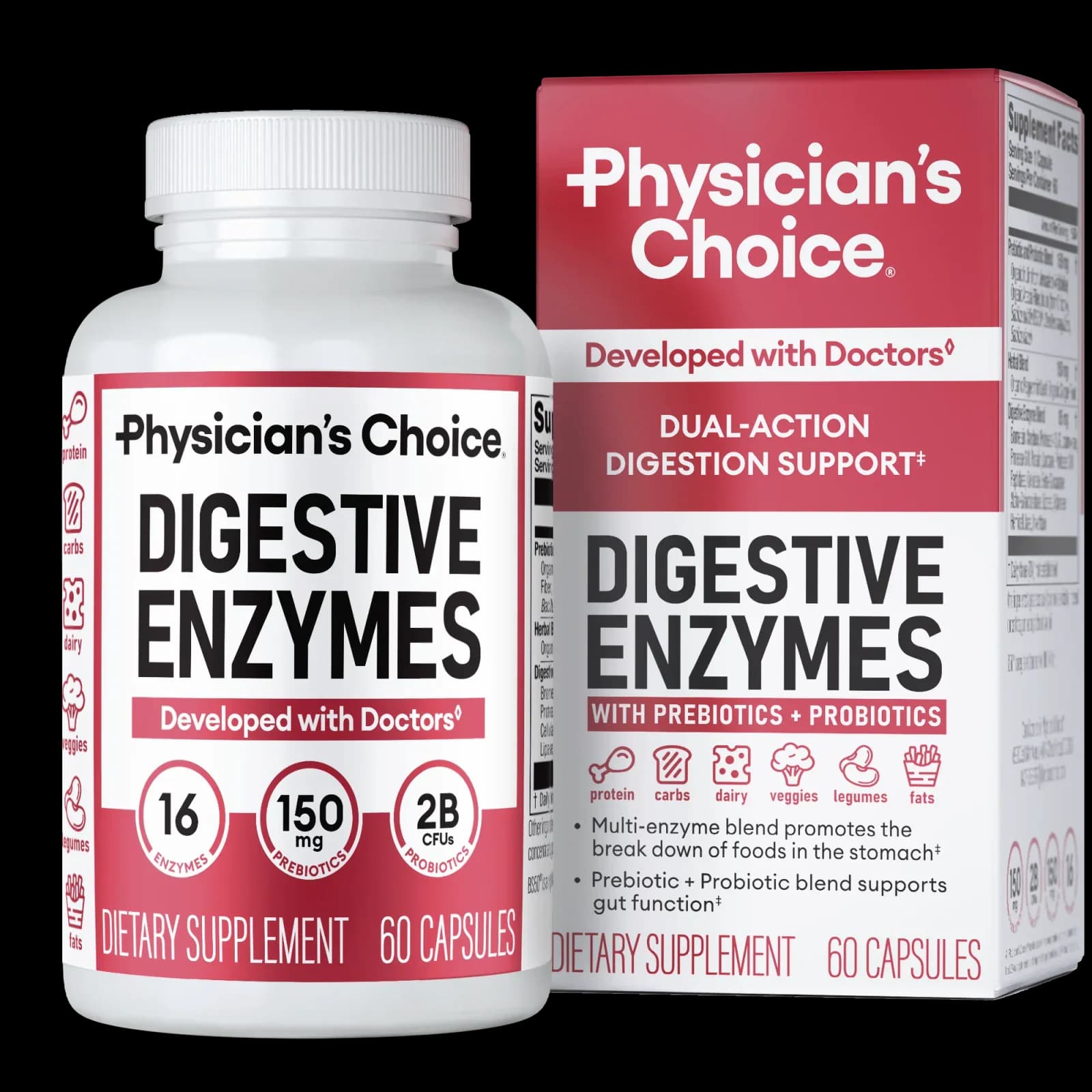
A viral one-a-day blend of 16 enzymes and spore probiotics, but its three proprietary blends list no enzyme activity units, so potency can't be judged.
We may earn a commission when you buy through these links — it never affects our scores. How we make money
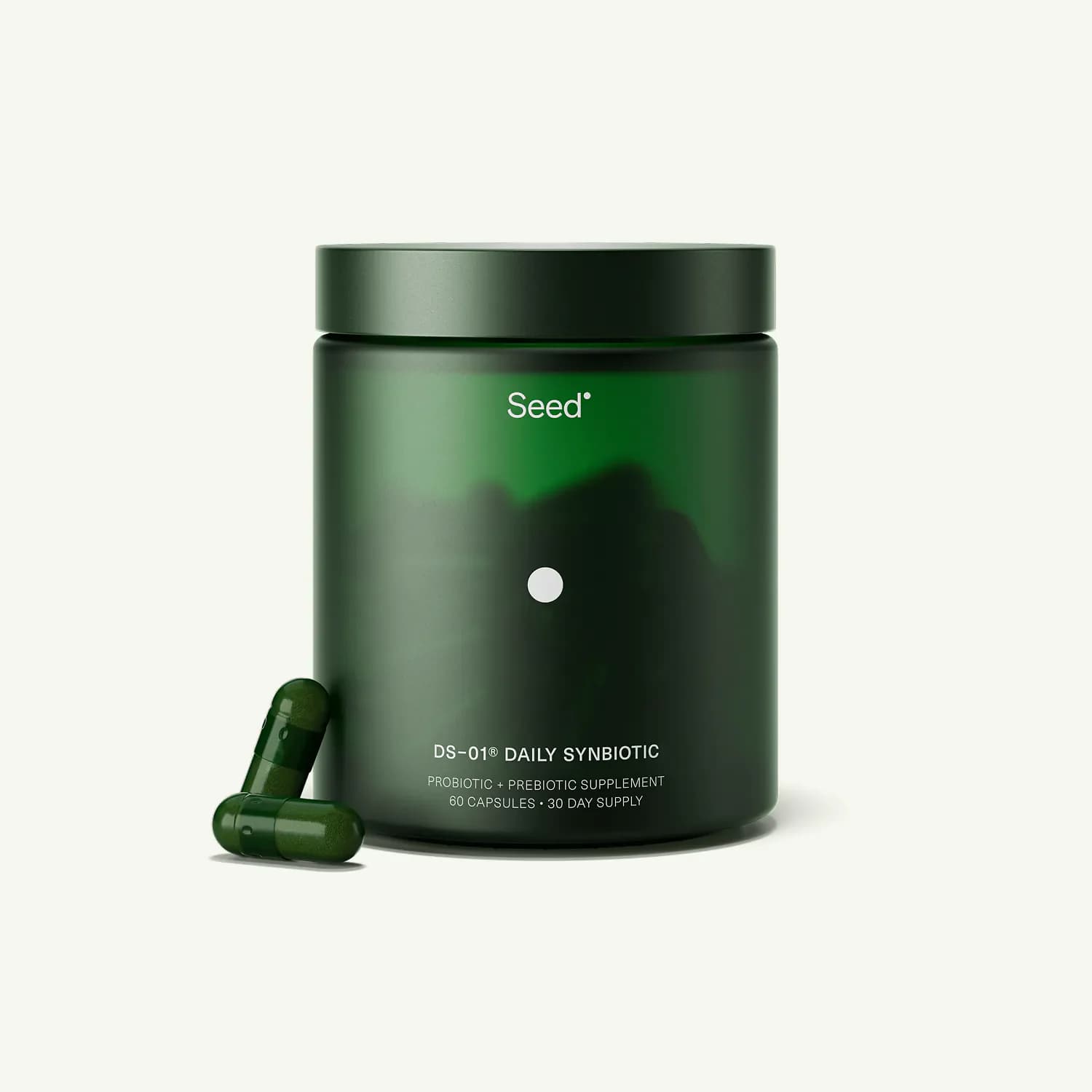
A 24-strain probiotic plus pomegranate prebiotic backed by its own 350-person trial on bloating and gas. Strong science, premium price.
We may earn a commission when you buy through these links — it never affects our scores. How we make money
We may earn a commission when you buy through these links — it never affects our scores. How we make money
The short answer
Choose Physician's Choice if…
- Budget shoppers who want to try a broad enzyme blend with meals
- People who have already found it helps after heavy meals
- Anyone who prefers a simple one-capsule routine
- You care most about value
- You want the lower cost per serving ($0.40)
Choose Seed if…
- Occasional bloating and gas
- People who want a formula tested as a whole
- Travelers who need a shelf-stable probiotic
- Vegan and gluten-free diets
- You care most about efficacy, quality & purity, experience, transparency
Key differences
- Biggest scoring gap
- Efficacy: Seed 8.2, Physician's Choice 4.2. This factor covers key ingredients at clinically studied doses, and how strong the evidence is.
- Price
- Physician's Choice costs $0.40 a serving, 76% less than Seed ($1.67): about $12.00 versus $50.10 for 30 servings at the list prices in our reviews.
- Independent testing
- Neither carries an independent certification we could verify, such as NSF, USP or Informed Choice.
- Formula
- Of the key ingredients in our reviews, only Physician's Choice lists inulin.
- Format
- Physician's Choice: capsule, 60 servings per container; Seed: capsule, 30 servings per container.
- Dietary labels
- Only Physician's Choice is labeled soy-free. Only Seed is labeled gluten-free and keto-friendly.
Side by side
| Digestive Enzymes | DS-01 Daily Synbiotic | |
|---|---|---|
| Our score | 5.7 / 10 | 7.4 / 10 |
| Efficacy (30%) | 4.2 | 8.2 |
| Quality & Purity (25%) | 6.8 | 8.0 |
| Value (20%) | 6.8 | 6.0 |
| Experience (15%) | 7.1 | 7.8 |
| Transparency (10%) | 3.5 | 6.0 |
| Form | Capsule | Capsule |
| Serving | 1 Capsule60 servings per container | 2 capsules30 servings per container |
| Price per serving | $0.40 | $1.67 |
| Testing & certifications | Third-party testedcGMP facility | Third-party tested |
| Dietary | Vegan, Vegetarian, Dairy-free, Soy-free, Non-GMO | Vegan, Vegetarian, Gluten-free, Dairy-free, Keto-friendly, Non-GMO |
| Key ingredients |
|
|
| Flavors | — | — |
| Creator video reviews | 5 | 4 |
Pros and cons
Digestive Enzymes
- About 40 cents a day for the 60-count bottle, less with larger sizes or a subscription
- Includes Bacillus subtilis BS50, a branded strain with a published human trial on gas-related symptoms
- Covers enzymes for protein, starch, fat, dairy sugar and bean sugars in one vegan capsule
- Three proprietary blends with no enzyme activity units, so potency can't be compared or verified
- The 2 billion CFU claim appears only on the front label, and two of the three strains lack strain designations
DS-01 Daily Synbiotic
- The finished formula was tested in a 350-person randomized, placebo-controlled trial on bloating and gas
- All 24 strains are listed with strain designations
- Potency is guaranteed through the expiration date, and it's shelf-stable up to 79°F
- About $1.67–$2.00 a day, several times the cost of mainstream probiotics
- Strains are grouped into four blends with no per-strain amounts
Our verdict: Physician's Choice vs Seed
Seed is the stronger product overall, 7.4 to 5.7 in our scoring, ahead on efficacy, quality & purity, experience and transparency. Physician's Choice is the value pick at 76% less per serving. Each full review shows the evidence, testing and buyer feedback behind these scores.
What creators say
Questions people ask
Is Physician's Choice better than Seed?
Which is cheaper per serving, Physician's Choice or Seed?
Who should choose Physician's Choice over Seed?
What is the difference between Physician's Choice and Seed?
More gut health & probiotics comparisons
4-in-1 Psyllium Fiber Powder, Sugar-Free vs DS-01 Daily Synbiotic
Digestive Daily Probiotic Capsules vs 4-in-1 Psyllium Fiber Powder, Sugar-Free
4-in-1 Psyllium Fiber Powder, Sugar-Free vs Digestive Enzymes
Digestive Daily Probiotic Capsules vs DS-01 Daily Synbiotic
Digestive Daily Probiotic Capsules vs Digestive Enzymes
See all gut health & probiotics, ranked