On this page
- EPA, DHA and ALA: which omega-3s matter
- "Fish oil 1,000 mg" is not your omega-3 dose
- Triglycerides, ethyl esters and other forms
- Freshness: oxidation, TOTOX and the smell test
- Third-party testing: IFOS, USP and NSF
- Algal oil for vegans and fish-avoiders
- How much EPA + DHA? Dosing by goal
- Safety: atrial fibrillation, bleeding and side effects
- How to choose a quality fish oil: a checklist
- The bottom line
Key takeaways
- The dose that matters is EPA + DHA per serving. A typical 1,000 mg fish oil softgel provides only about 300 mg.
- Triglyceride and re-esterified triglyceride forms absorb somewhat better than ethyl esters, but taking any form with a meal that contains fat matters just as much.
- Oxidation varies widely between products. Look for published oxidation data or third-party programs such as IFOS or USP rather than relying on price or brand.
- Algal oil is a direct plant-based source of DHA, and some products add EPA. Plant ALA converts to EPA and DHA at less than 15%.
- Omega-3 supplements are linked to a higher risk of atrial fibrillation, especially above 1 g a day, and high-dose purified EPA slightly raises bleeding risk, so larger doses should be clinician-guided.
Fish oil is a supplement-shelf staple, and one of the easiest to buy badly. The big number on the front of the bottle usually isn't the dose that matters, the chemical form changes how well it's absorbed, and freshness varies more than most shoppers realize. This buying guide shows you how to read an omega-3 label, compare forms, judge quality and match your dose to your goal, along with the safety limits worth knowing.
EPA, DHA and ALA: which omega-3s matter
There are three main omega-3 fatty acids. ALA comes from plant oils such as flaxseed, soybean and canola, and from chia seeds and walnuts. EPA and DHA, the long-chain omega-3s, come from fish, fish oil, krill and algae [1]. Your body can convert ALA into EPA and then DHA, but conversion is very limited, at less than 15%, so eating EPA and DHA directly is the only practical way to raise their levels [1]. Fish don't make EPA and DHA themselves. They get them from microalgae at the base of the marine food chain [1], which is why algal oil works as a vegan source.
Tissue levels can be measured with the omega-3 index, which is EPA + DHA as a percentage of the fatty acids in red blood cell membranes. It reflects your intake over roughly the previous four months [1].
"Fish oil 1,000 mg" is not your omega-3 dose
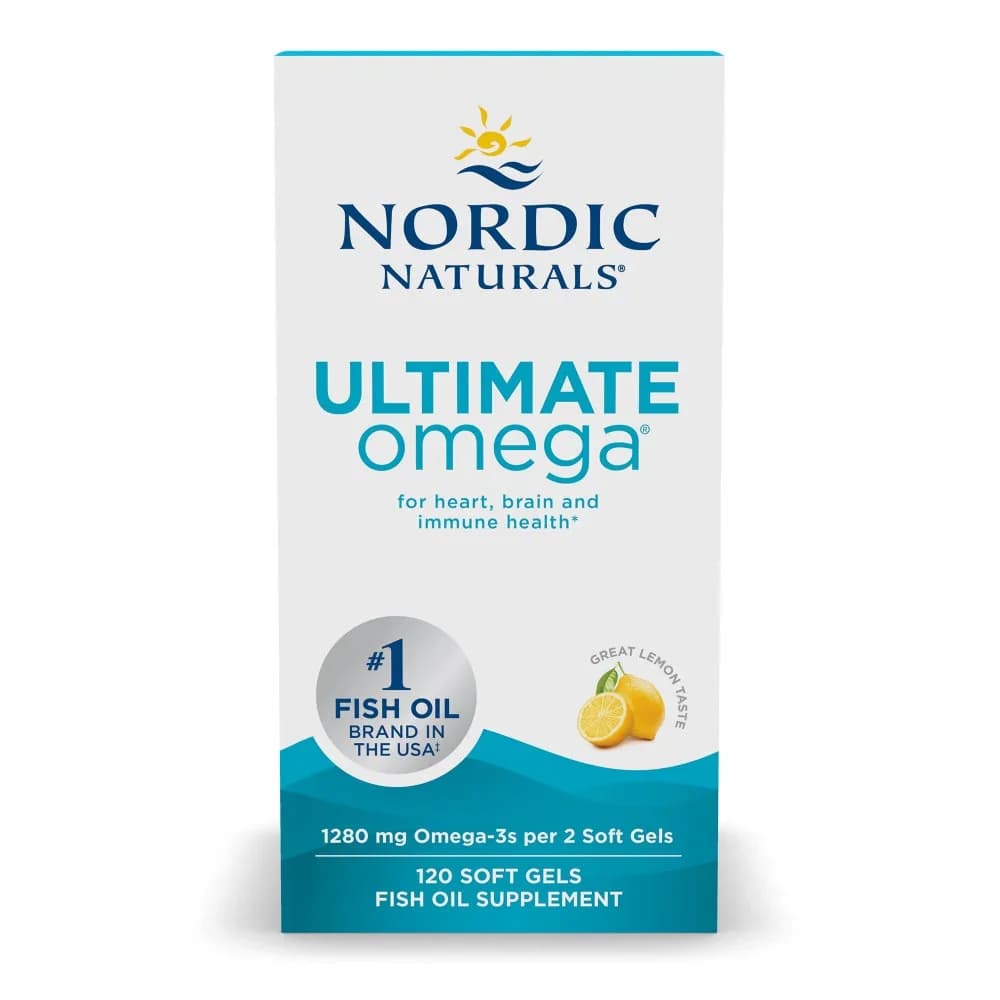
A typical fish oil softgel contains 1,000 mg of fish oil but only about 180 mg of EPA and 120 mg of DHA, or 300 mg of the omega-3s you actually want [1]. The rest is other fats. That's why the Supplement Facts panel, not the front label, is where the real dose lives.
How to read it:
- Find EPA and DHA as separate lines and add them together. Don't rely on a "total omega-3" figure alone.
- Check the serving size. If a serving is two or three softgels, the EPA + DHA number covers all of them.
- Do the math on value. Divide the price per bottle by the total grams of EPA + DHA it contains. A cheap bottle of standard softgels can cost more per gram of EPA + DHA than a concentrate.
For example, reaching 1 g of EPA + DHA a day would take three to four standard 300 mg softgels, versus one or two capsules of a more concentrated product.
Triglycerides, ethyl esters and other forms
Omega-3 supplements come in several chemical forms: natural triglycerides, ethyl esters, re-esterified triglycerides, free fatty acids and phospholipids [1]. Natural triglycerides are the form found in fish. Ethyl esters are made by swapping the glycerol backbone for ethanol, and they're common in concentrated products. Re-esterified triglycerides are ethyl esters converted back into triglycerides [1][2].
| Form | What it is | Absorption notes | Where you'll see it |
|---|---|---|---|
| Natural triglyceride (TG) | The form that occurs in fish [1] | Reference point for comparisons [2] | Standard fish oil, cod liver oil |
| Ethyl ester (EE) | Made with ethanol; common in concentrates [1][2] | About 73% of natural fish oil in a two-week trial [2]; highly dependent on meal fat [4] | Many concentrates; the prescription drug icosapent ethyl [1] |
| Re-esterified triglyceride (rTG) | Ethyl esters converted back to TG [1] | About 124% of natural fish oil [2]; raised the omega-3 index faster and higher than EE over six months [3] | Premium concentrates |
| Free fatty acid (FFA) | Unbound fatty acids [1] | About 91% of natural fish oil, not significantly different [2] | Some concentrates |
| Algal oil | Oil from microalgae [1] | DHA as available as DHA from cooked salmon [10] | Vegan and vegetarian products |
Overall, re-esterified triglycerides, natural triglycerides and free fatty acids have somewhat higher bioavailability than ethyl esters, but every form significantly raises blood EPA and DHA [1].
Meal fat matters as much as form. In a classic absorption study, ethyl esters were absorbed about three times better, reaching roughly 60%, when taken with a high-fat meal (44 g of fat) than with a low-fat meal (8 g of fat). Triglyceride EPA absorption also improved, from 69% to 90% [4].
Pro tip: Whatever form you buy, take it with your largest meal. If your product is an ethyl ester concentrate, that step matters even more.
Freshness: oxidation, TOTOX and the smell test
Omega-3 fats are highly unsaturated, so they oxidize. Labs measure primary oxidation with the peroxide value (PV) and secondary oxidation with the anisidine value (AV), then combine them into a TOTOX score (2 × PV + AV) [5]. The industry's voluntary limits, set by the Global Organization for EPA and DHA Omega-3s (GOED), are PV ≤ 5 meq O₂/kg, AV ≤ 20 and TOTOX ≤ 26 [5][6].
How often products fail is contested:
- A 2015 study of 32 fish oils sold in New Zealand found that 83% exceeded the peroxide limit and 50% exceeded the TOTOX limit. Only 3 products contained at least the labeled amount of EPA + DHA. Price, best-before date and country of origin didn't predict quality [7].
- A 2017 retest of 47 New Zealand products, by authors working with the omega-3 industry's trade association, found that 72–86% met the individual oxidation limits and 91% met their EPA + DHA label claims [6].
- In a Canadian analysis of 171 products, by researchers at a private company, 50% exceeded at least one voluntary oxidation limit. Flavored oils and children's products scored worse [5].
One technical wrinkle is that flavorings interfere with the anisidine test, so standard TOTOX limits don't apply cleanly to flavored oils [6].
What to do: Buy from brands that publish oxidation results or hold third-party certification, check the expiration date, store the bottle sealed and cool, and trust your nose. An unflavored oil that smells sharply fishy or rancid should be replaced.
Third-party testing: IFOS, USP and NSF
Supplements aren't approved by the FDA for safety or effectiveness before they're sold [18], so independent testing fills the gap.
- IFOS (International Fish Oil Standards), launched in 2004, tests omega-3 products for active ingredient content against the label, for contaminants and for stability (oxidation), and posts product reports online [8].
- USP Verified products are checked for ingredients in the declared amounts, for harmful levels of specified contaminants, for proper breakdown, and for manufacturing under FDA good manufacturing practices [9].
- NSF certification (under the NSF/ANSI 173 standard) includes a label claim review, a toxicology review and a contaminant review [19].
Mercury isn't a major concern with supplements. Omega-3 supplements have not been found to contain methylmercury, because it's removed during processing and purification [1].
Algal oil for vegans and fish-avoiders
Because EPA and DHA originate in microalgae, algal oil provides them without fish [1]. In a two-week study of 32 adults, 600 mg a day of DHA from algal-oil capsules raised DHA in plasma and red blood cells just as much as the same amount from cooked salmon [10]. Some algal oils provide mostly DHA, so check the EPA line too. Flax, chia and walnuts are healthy foods, but because ALA converts so poorly, they can't substitute for EPA and DHA [1].
How much EPA + DHA? Dosing by goal
| Goal | Typical EPA + DHA | What the evidence says |
|---|---|---|
| General health, low fish intake | About 250 mg/day | The amount the European Food Safety Authority advises for all adults [1] |
| Pregnancy | At least 250 mg/day plus 100–200 mg extra DHA; 600–1,000 mg/day if intake is low, starting by 20 weeks | Guidance from a maternal-fetal medicine clinical practice guideline [1]. Omega-3s cut preterm birth by 11% and early preterm birth by 42% in a Cochrane review [11] |
| High triglycerides (with a clinician) | 2–4 g/day | 4 g/day of prescription omega-3 lowers very high triglycerides by 30% or more [12] |
| Heart disease prevention | Not established for supplements | 840 mg/day didn't reduce major cardiovascular events in adults without heart disease [13]; results with 4 g/day prescription products were mixed [14][15] |
| Vegan or vegetarian | Same targets, from algal oil | Algal DHA matched salmon DHA in a head-to-head study [10] |
A few details are worth knowing. In the VITAL trial, about 26,000 US adults took a 1 g omega-3 capsule a day (840 mg of EPA + DHA) or a placebo for a median of 5.3 years, with no significant reduction in major cardiovascular events [1][13]. In REDUCE-IT, 4 g a day of prescription purified EPA (icosapent ethyl) lowered major cardiovascular events by about 25% in statin-treated patients with elevated triglycerides. The trial was funded by the drug company Amarin Pharma [14]. STRENGTH, which tested 4 g a day of a different prescription omega-3 containing both EPA and DHA, was stopped early for lack of benefit [15]. The takeaway is that over-the-counter fish oil is not a substitute for a prescription omega-3 or for cardiology care.
Safety: atrial fibrillation, bleeding and side effects
Atrial fibrillation. A meta-analysis of seven large cardiovascular trials involving 81,210 people found that omega-3 supplements were linked to a 25% higher relative risk of atrial fibrillation. The increase was 49% in trials using more than 1 g a day and 12% at 1 g a day or less, and risk rose about 11% for each additional gram [16]. In REDUCE-IT, 3.1% of patients taking icosapent ethyl were hospitalized for atrial fibrillation or flutter, compared with 2.1% on placebo [14].
Bleeding. Across 11 randomized trials with 120,643 people, omega-3s did not significantly increase overall bleeding. High-dose purified EPA raised relative bleeding risk by about 50%, which amounted to only a modest absolute increase of about 0.6% [17]. Fish oil can have antiplatelet effects at high doses. Most research finds that 3–6 g a day doesn't significantly change anticoagulation in people taking warfarin, but prescription omega-3 labels still advise periodic INR monitoring [1].
Upper limits. The European Food Safety Authority considers long-term intakes of up to about 5 g a day of EPA + DHA from supplements safe, and the FDA has concluded that supplements providing up to 5 g a day are safe when used as recommended. The FDA also says supplement labels shouldn't recommend more than 2 g a day [1].
Everyday side effects are usually mild: an unpleasant taste, bad breath, heartburn, nausea, stomach discomfort, diarrhea, headache and odorous sweat [1]. Taking it with meals, or splitting the dose, may help.
Safety note: Talk to your healthcare professional before taking more than 1 g of EPA + DHA a day, especially if you have atrial fibrillation or other heart rhythm problems, take anticoagulant or antiplatelet medication, or have a fish or shellfish allergy.
How to choose a quality fish oil: a checklist
- EPA + DHA per serving: at least the amount your goal requires, with EPA and DHA listed separately.
- Serving size and price per gram of EPA + DHA, not price per bottle.
- Form: triglyceride or re-esterified triglyceride if the budget allows. Ethyl esters are fine if you take them with a meal that contains fat [2][4].
- Proof of quality: an IFOS or USP certification, or published test results for EPA/DHA content, oxidation and contaminants [8][9].
- Freshness: a clear expiration date and an oil that doesn't smell rancid. Be extra cautious with flavored oils, because flavor can hide oxidation [5][6].
- Red flags: claims that a supplement treats heart disease or other conditions, vague "pharmaceutical grade" language without test data, and a front-label "fish oil" number with no EPA/DHA breakdown.
The bottom line
Choose fish oil by EPA + DHA per serving, not by the fish oil number on the front. Prefer products with published or third-party-verified content and oxidation results, and take your omega-3s with a meal. About 250 mg a day covers general needs, pregnancy calls for more DHA, and doses in the grams, whether for triglycerides or heart health, belong in a conversation with your clinician because atrial fibrillation and bleeding risks rise with dose. If you don't eat fish, algal oil is a well-supported alternative.
This article is for general information and isn’t medical advice. Supplements can interact with medications and conditions — talk to a qualified healthcare professional before starting one. Medical disclaimer.
Frequently asked questions
How much EPA and DHA should I take per day?
Is triglyceride fish oil better than ethyl ester?
How can I tell if my fish oil is rancid?
Is algal oil as good as fish oil?
Can fish oil cause atrial fibrillation?
References
- [1]Omega-3 Fatty Acids: Fact Sheet for Health ProfessionalsNIH Office of Dietary Supplements (updated August 2025)
- [2]Bioavailability of marine n-3 fatty acid formulationsProstaglandins, Leukotrienes and Essential Fatty Acids (2010)
- [3]Enhanced increase of omega-3 index in response to long-term n-3 fatty acid supplementation from triacylglycerides versus ethyl estersEuropean Journal of Clinical Nutrition (2011)
- [4]Absorption of eicosapentaenoic acid and docosahexaenoic acid from fish oil triacylglycerols or fish oil ethyl esters co-ingested with a high-fat mealBiochemical and Biophysical Research Communications (1988)
- [5]Oxidation levels of North American over-the-counter n-3 (omega-3) supplements and the influence of supplement formulation and delivery form on evaluating oxidative safetyJournal of Nutritional Science (2015)
- [6]Omega-3 Long-Chain Polyunsaturated Fatty Acid Content and Oxidation State of Fish Oil Supplements in New ZealandScientific Reports (2017)
- [7]Fish oil supplements in New Zealand are highly oxidised and do not meet label content of n-3 PUFAScientific Reports (2015)
- [8]IFOS (International Fish Oil Standards) certification programNutrasource
- [9]USP Verified MarkU.S. Pharmacopeia
- [10]Algal-oil capsules and cooked salmon: nutritionally equivalent sources of docosahexaenoic acidJournal of the American Dietetic Association (2008)
- [11]Omega-3 fatty acid addition during pregnancyCochrane Database of Systematic Reviews (2018)
- [12]Omega-3 Fatty Acids for the Management of Hypertriglyceridemia: A Science Advisory From the American Heart AssociationCirculation (2019)
- [13]Marine n-3 Fatty Acids and Prevention of Cardiovascular Disease and Cancer (VITAL)The New England Journal of Medicine (2019)
- [14]Cardiovascular Risk Reduction with Icosapent Ethyl for Hypertriglyceridemia (REDUCE-IT)The New England Journal of Medicine (2019)
- [15]Effect of High-Dose Omega-3 Fatty Acids vs Corn Oil on Major Adverse Cardiovascular Events in Patients at High Cardiovascular Risk: The STRENGTH Randomized Clinical TrialJAMA (2020)
- [16]Effect of Long-Term Marine Omega-3 Fatty Acids Supplementation on the Risk of Atrial Fibrillation in Randomized Controlled Trials of Cardiovascular Outcomes: A Systematic Review and Meta-AnalysisCirculation (2021)
- [17]Bleeding Risk in Patients Receiving Omega-3 Polyunsaturated Fatty Acids: A Systematic Review and Meta-Analysis of Randomized Clinical TrialsJournal of the American Heart Association (2024)
- [18]Information for Consumers on Using Dietary SupplementsU.S. Food and Drug Administration
- [19]Dietary Supplement and Vitamin CertificationNSF