
8.8Excellent
One lemon-flavored teaspoon delivers 1,300 mg EPA+DHA from Norwegian-processed fish oil, IFOS certified; the high-dose pick for people who hate capsules.
3rd-party tested
3 videos ShopOmega-3 & Fish Oil

950 mg EPA+DHA in a single IFOS-certified softgel from wild Alaska pollock, at roughly a third of a dollar per day; the value benchmark for fish oil.
Excellent
Nutrition Reviews score
Weighted across efficacy, quality, value, experience & transparency. See breakdown
We may earn a commission when you buy through these links — it never affects our scores. How we make money
Last reviewed September 29, 2026 by the Nutrition Reviews Editorial Team · How we review
Our verdict
This is our value pick for fish oil: nearly a gram of EPA+DHA per day from one small softgel, IFOS certification with public batch reports, MSC-certified sourcing and a very low cost per serving. It lacks flavoring and leans EPA-heavy, but for most adults who want a straightforward daily omega-3, it is hard to beat.
Best for
Skip it if
Our five-factor score out of 10. Factors are weighted by how much they matter to the outcome you’re paying for. Methodology
out of 10
Key ingredients at clinically studied doses, and how strong the evidence is.
Third-party testing and certifications, manufacturing standards, contaminant testing, recall history.
Cost per effective serving compared with category peers.
Taste, mixability, texture and tolerability from aggregated buyer and creator feedback.
Full label disclosure (no proprietary blends), available COAs, honest marketing.
Sports Research Triple Strength is the rare fish oil that is both inexpensive and independently verified. Each softgel contains 1,250 mg of wild Alaska pollock oil concentrate providing 1,040 mg of total omega-3s in triglyceride form, including 690 mg EPA and 260 mg DHA (950 mg combined). One softgel a day therefore lands close to the roughly 1 g/day of EPA plus DHA the American Heart Association suggests for people with existing coronary heart disease; some buyers take two for a higher intake, which is still well under the 5 g/day the FDA considers safe from supplements.
The quality story is unusually well documented. The product is enrolled in the IFOS program run by SGS Nutrasource, whose public database lists batch-by-batch reports for potency, oxidation and contaminants, and it also carries IGEN non-GMO certification. The fish comes from an MSC-certified sustainable fishery, and the brand says it is made in the USA in cGMP-compliant facilities. The softgel shell is fish (tilapia) gelatin rather than bovine or porcine gelatin, which suits pescatarians.
Value is the headline: about $30 for 90 softgels works out to roughly $0.33 per day, about half the daily cost of many premium brands for a similar dose. Buyers and creator reviewers repeatedly mention the lack of fishy burps and the manageable softgel size, and the 90-count listing averages 4.7 stars across 60,000+ buyer ratings. The main trade-offs are an EPA-heavy ratio with modest DHA, no flavoring for those who like lemon oils, and only tocopherols as the added antioxidant.
The label advises consulting a healthcare professional before use if you are pregnant, nursing, take prescription medication such as blood thinners, or are planning surgery.
| Key ingredient | Per serving | Why it matters |
|---|---|---|
| EPA (eicosapentaenoic acid) Makes up most of the omega-3 content; EPA is the fraction most studied for triglyceride and cardiovascular outcomes. | 690 mg | Makes up most of the omega-3 content; EPA is the fraction most studied for triglyceride and cardiovascular outcomes. |
| DHA (docosahexaenoic acid) Brain and retinal structural fat; lower share than in balanced formulas. | 260 mg | Brain and retinal structural fat; lower share than in balanced formulas. |
| Total omega-3 fatty acids as triglycerides From 1,250 mg wild Alaska pollock oil concentrate; triglyceride forms have somewhat higher bioavailability than ethyl esters, per the NIH. | 1,040 mg | From 1,250 mg wild Alaska pollock oil concentrate; triglyceride forms have somewhat higher bioavailability than ethyl esters, per the NIH. |
Supplement Facts
Serving Size 1 Softgel
Servings Per Container 90
* Percent Daily Values are based on a 2,000 calorie diet. † Daily Value not established.
Other ingredients: Softgel capsule (fish gelatin, [tilapia-sourced], vegetable glycerin, purified water), tocopherols.
Contains: Fish (Alaska pollock).
Testing & quality
Sports Research states its products are third-party tested and made in cGMP-compliant facilities; several carry Non-GMO Project Verified and certified vegan marks, but its D3 + K2 has no USP or NSF certification.
Goals it supports
Independent creators reviewing Triple Strength Omega-3 Fish Oil on TikTok and YouTube.
What we like
Watch-outs
Similar products, ranked by our score.
One lemon-flavored teaspoon delivers 1,300 mg EPA+DHA from Norwegian-processed fish oil, IFOS certified; the high-dose pick for people who hate capsules.
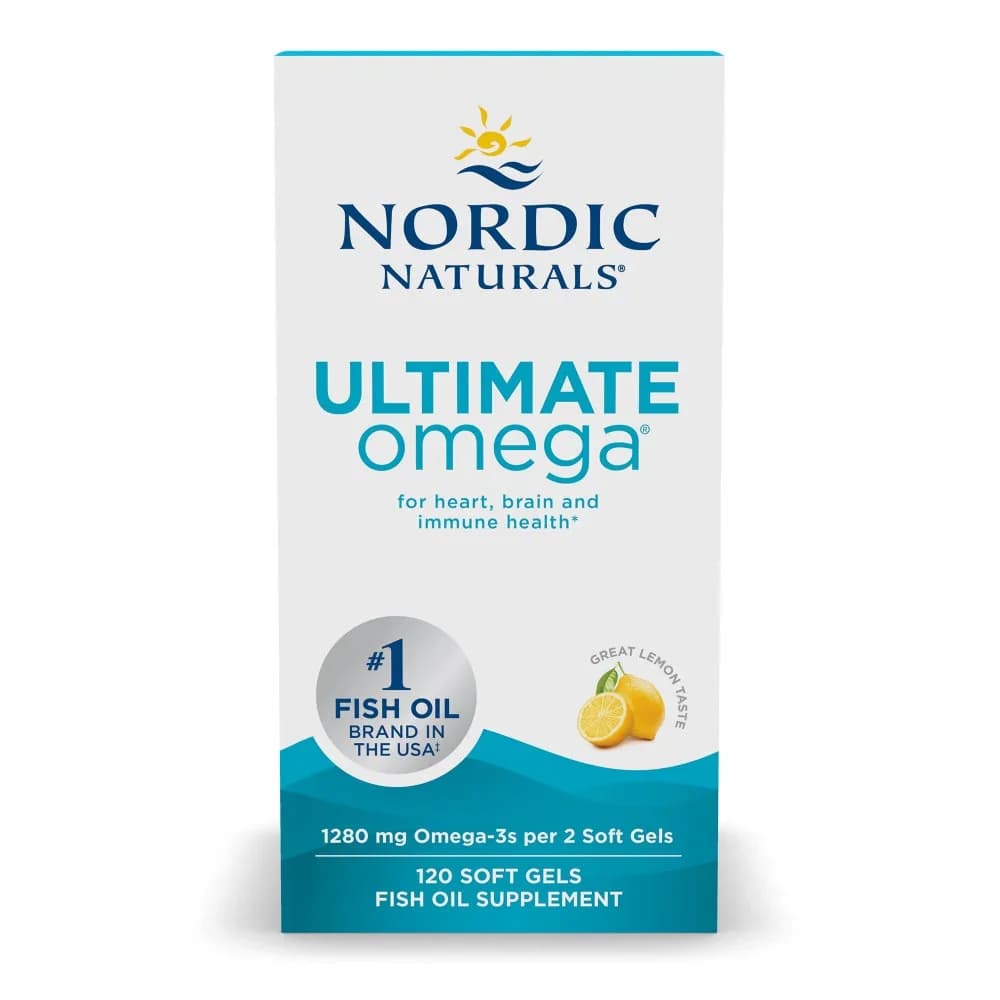
Nordic Naturals
1,100 mg EPA+DHA per two lemon-flavored softgels in triglyceride form, with lot-level purity testing; excellent tolerability, but pricier than IFOS-certified rivals.

Nordic Naturals
A plant-based omega-3 from microalgae with 195 mg EPA and 390 mg DHA per two softgels; a clean fish-free option, but you pay more per gram than for fish oil.

Nature Made
A USP Verified, very low-cost drugstore fish oil; two large softgels supply only 600 mg EPA+DHA, and the label does not split EPA from DHA.
Ignore the "1,000 mg fish oil" headline. Learn to read EPA + DHA per serving, choose the right form, spot oxidized oil, and dose safely for your goal.
Nutrition Reviews Editorial Team · Sep 28, 2026

Ashwagandha has real trials for stress and sleep, rare but serious liver risks and growing regulatory scrutiny. What extract names mean and which doses were studied.
Nutrition Reviews Editorial Team · Sep 28, 2026

Collagen has dozens of trials behind it, but much of the research is industry-funded. What holds up for skin, joints and hair, plus the doses studies used.
Nutrition Reviews Editorial Team · Sep 28, 2026