On this page
- Same protein, different processing
- Protein percentage: reading the tub
- Lactose: who actually needs isolate
- Leucine and amino acids: why whey stands out
- Digestion speed: does "fast" matter?
- Cost per 25 g of protein: the only fair price comparison
- Blends, "clear whey" and front-of-label marketing
- Amino spiking: the red flag hidden in the protein number
- Third-party testing: what the seals mean
- How to choose a quality whey protein
- Safety notes
- The bottom line
Key takeaways
- Concentrate, isolate and hydrolysate are the same high-quality milk protein; the form makes little difference to muscle gain.
- WPC 80 is about 80% protein with 4–10% lactose; isolate is at least 90% protein with about 0.5–1% lactose, so it mainly helps if lactose bothers you.
- Hydrolysate raises blood amino acids fastest, but an 8-week trial found no extra strength or muscle benefit.
- Compare products by cost per 25 g of protein, not price per tub or per scoop.
- Protein totals can be inflated with cheap nitrogen sources (amino spiking), so favor transparent labels and third-party certification.
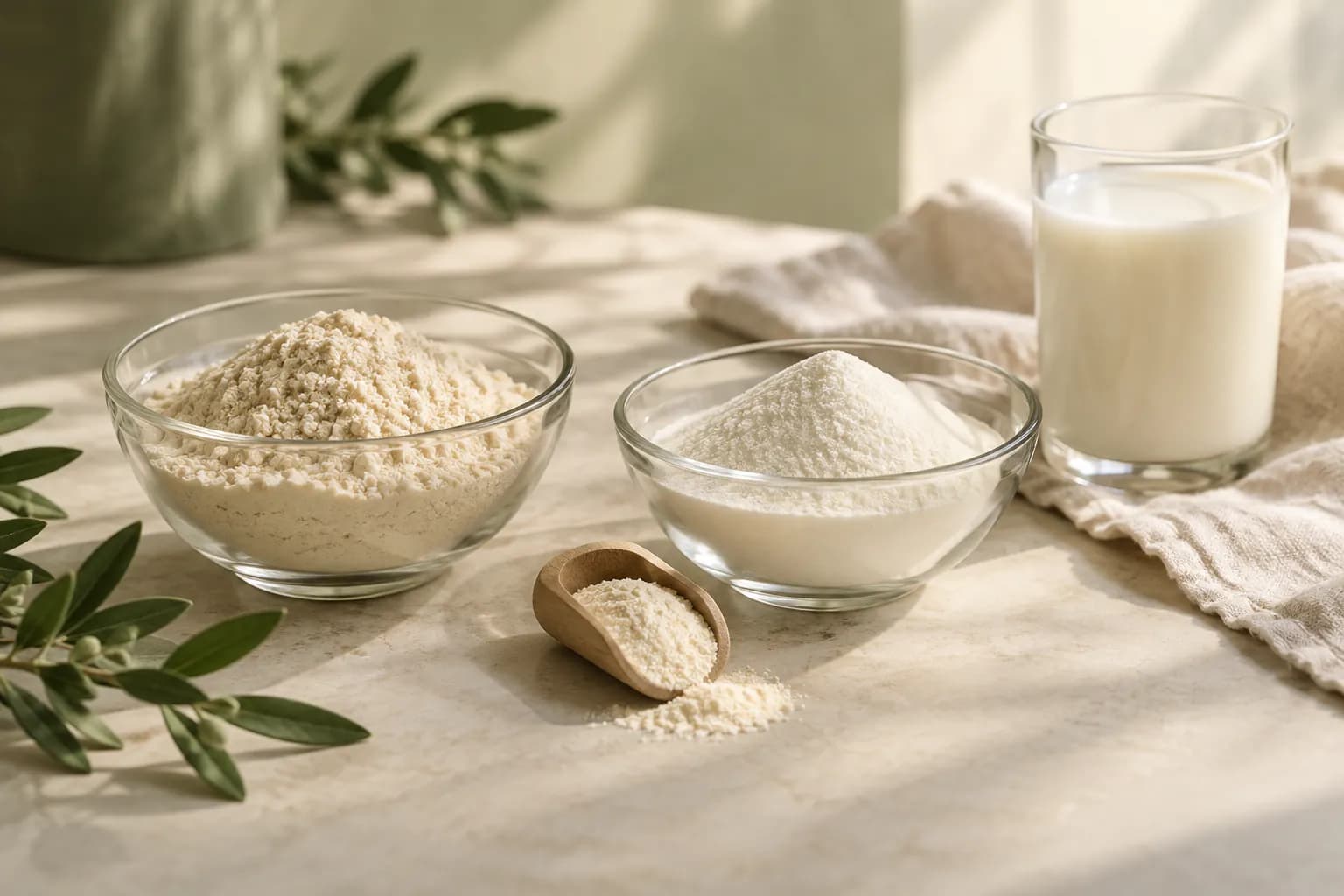
Whey concentrate, isolate and hydrolysate all start as the same milk proteins. They differ in how much protein, lactose and processing you get per scoop, and in what you pay. This guide explains what those differences mean for your muscles, your digestion and your budget, how to work out the cost per 25 g of protein, and how to spot red flags like amino spiking before you buy.
Same protein, different processing
Whey is the liquid left behind when milk is made into cheese. Filtering it concentrates the protein and strips out lactose, fat and minerals, and how far that filtering goes determines what you end up with [1].
- Whey protein concentrate (WPC) is whey concentrated to at least 25% protein [2]. Sports products generally use concentrates in the 70–80% protein range [1]. The standard WPC 80 grade typically contains 80–82% protein (dry basis), 4–10% lactose and 4–8% fat [2].
- Whey protein isolate (WPI) is filtered further, to at least 90% protein on a dry basis, with typical lactose and fat of just 0.5–1.0% each. It's made by membrane filtration, ion exchange, or both [3].
- Whey protein hydrolysate is whey that has been partly broken down with enzymes into smaller peptides. It is, in effect, pre-digested [1].
| Concentrate (WPC 80) | Isolate (WPI) | Hydrolysate | |
|---|---|---|---|
| Protein (dry powder) | ~80–82% | 90–92% | Depends on the starting whey |
| Lactose | ~4–10% | ~0.5–1% | Depends on the starting whey |
| Fat | ~4–8% | ~0.5–1% | Depends on the starting whey |
| Speed of amino acid rise in blood | Fast | Fast | Fastest |
Sources: composition from American Dairy Products Institute standards [2][3]; digestion and outcome research discussed below.
Protein percentage: reading the tub
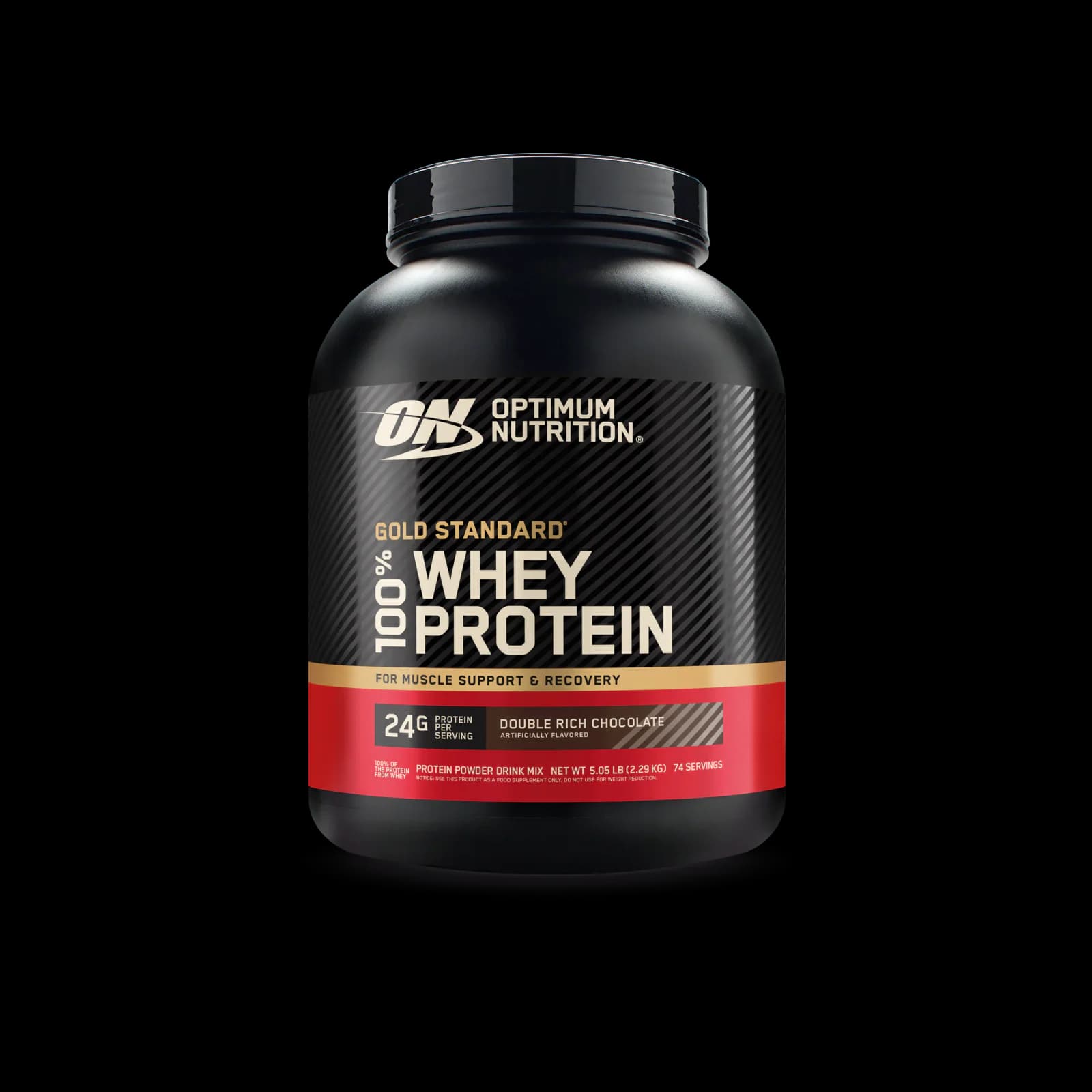
A quick check of any label is its protein density: grams of protein per serving divided by the serving's weight in grams. Pure isolate is about 90–92% protein on a dry basis and typically carries 4–5% moisture [3]. So even unflavored isolate, as sold, lands around 86–88% protein. Flavors, sweeteners, cocoa and thickeners dilute that further.
That gives you a sanity check. A flavored powder claiming 25 g of protein in a 27 g scoop (about 93%) is claiming more than pure isolate can deliver, and that deserves a question. Lower density isn't a problem in itself. Many good concentrate-based products sit well below isolate. Just compare them on cost per gram of protein rather than per scoop.
Lactose: who actually needs isolate
For most people, lactose is the main practical reason to pay for isolate. Based on those typical compositions, a 30 g scoop of straight WPC 80 would carry roughly 1.2–3 g of lactose, while the same amount of isolate would carry about 0.15–0.3 g [2][3]. For perspective, a systematic review found that most people with lactose intolerance or malabsorption can handle 12–15 g of lactose at once, roughly the amount in a cup of milk [4].
So many mildly lactose-intolerant people do fine with concentrate. If even small amounts bother you, isolate is the easy fix. If symptoms persist even with isolate, something other than lactose may be responsible, and that's worth raising with a clinician.
Safety note: Lactose intolerance and milk allergy are different conditions. Whey, including isolate and hydrolysate, is milk protein, and milk is one of the major food allergens in the U.S. [5]. If you have a milk allergy, avoid whey products unless your allergist advises otherwise.
Leucine and amino acids: why whey stands out
Muscle protein synthesis is driven by essential amino acids, especially leucine. Whey is rich in both. In a laboratory comparison of 15 dietary protein sources, whey was 43% essential amino acids and about 11% leucine, so 25 g of whey supplies roughly 2.7 g of leucine [6]. The International Society of Sports Nutrition (ISSN) suggests that each protein serving provide roughly 700–3,000 mg of leucine along with a full set of essential amino acids [1].
Concentrate, isolate and hydrolysate are made from the same milk proteins, so their amino acid profiles per gram of protein are broadly similar. What changes is how much protein, rather than lactose and fat, each scoop delivers. For comparison, matching the leucine in 25 g of whey takes about 38 g of pea protein isolate, 40 g of soy protein isolate or 47 g of oat protein [6].
Digestion speed: does "fast" matter?
Whey is a "fast" protein. It produces a sharp, short rise in blood amino acids, while casein, the other main milk protein, produces a slower and longer plateau [7]. After resistance exercise, whey hydrolysate stimulated more muscle protein synthesis than casein or soy in a lab study [8]. Hydrolysates also raise blood amino acids faster than intact whey [9].
Short-term lab responses don't necessarily add up to better long-term results, though. In an 8-week trial, 56 resistance-trained men took regular whey concentrate, a high-lactoferrin concentrate, an extensively hydrolyzed whey or a carbohydrate placebo. Strength gains were similar across groups, and muscle mass increased in all of them. The hydrolysate group lost more fat than the placebo group, a finding that needs replication [10]. Over months, total daily protein matters far more than the form. Across 49 trials, protein supplements boosted strength and muscle gains from resistance training, with the benefit leveling off at a total intake of around 1.6 g of protein per kilogram of body weight per day [11].
Bottom line: For most people, concentrate vs. isolate vs. hydrolysate comes down to digestive comfort, taste and budget, not muscle growth.
How much per serving?
The ISSN suggests about 0.25 g of protein per kg of body weight per serving, or 20–40 g in absolute terms [1]. In young, resistance-trained men, 20 g of whey isolate after training maximally stimulated muscle protein synthesis over the following 4 hours, and 40 g added little more [12]. Older adults may benefit from larger servings; the ISSN cites research in which about 40 g of whey isolate was needed to maximize the response in men averaging 71 years old [1].
Does timing matter?
Less than marketing suggests. The ISSN notes that protein taken either before or after training is beneficial, and that the muscle-building effect of a workout lasts at least 24 hours. The best timing is largely whatever you tolerate and will stick with. Spreading protein-rich meals or shakes every 3–4 hours across the day is a sensible default [1].
Cost per 25 g of protein: the only fair price comparison
Tubs differ in scoop size, protein per scoop and servings per container, so price per tub or per serving can mislead. Use this formula instead:
Cost per 25 g of protein = price ÷ (servings × grams of protein per serving) × 25
Here's a worked example. The numbers are round, made-up figures for illustration, not real products:
| Hypothetical product | Price | Servings | Protein per serving | Total protein | Cost per 25 g of protein |
|---|---|---|---|---|---|
| Concentrate blend | $60 | 74 | 24 g | 1,776 g | $0.84 |
| Isolate | $75 | 70 | 25 g | 1,750 g | $1.07 |
| Hydrolysate | $90 | 60 | 25 g | 1,500 g | $1.50 |
In this example, the isolate costs about 27% more per 25 g of protein than the concentrate. If concentrate agrees with your stomach, that premium buys no extra muscle. If lactose is an issue, it may be money well spent. The hydrolysate's premium buys speed that hasn't translated into better long-term gains [10].
Pro tip: Keep the formula in your phone's notes and run it before you buy. A lower price per serving can simply mean a smaller serving.
Blends, "clear whey" and front-of-label marketing
Many tubs contain a blend of concentrate and isolate, sometimes with some hydrolysate, even when "isolate" dominates the front label. The ingredient list tells you more. U.S. rules require ingredients to be listed in descending order of predominance by weight [13]. If whey protein concentrate is listed first, the product is mostly concentrate. That's fine if you tolerate lactose, but it shouldn't be priced like a pure isolate.
"Clear whey" drinks, which mix up thin and juice-like rather than milky, rely on isolate. Isolate is highly soluble and heat-stable in acidic drinks, which allows clear beverages at low pH [3]. You're paying for texture and taste rather than a different protein, so judge these products on cost per 25 g of protein like any other.
Amino spiking: the red flag hidden in the protein number
In the U.S., the protein figure on a label may be calculated from a product's nitrogen content, multiplied by a standard factor of 6.25 [14]. Standard methods such as the Kjeldahl test measure total nitrogen, not intact protein. That means adding cheap nitrogen-containing ingredients can inflate the apparent protein content [15]. These include free amino acids such as glycine or taurine, and even non-protein compounds such as urea or melamine [16]. The practice is called amino spiking or protein spiking. Label accuracy can't be taken for granted either. When researchers tested whey supplements sold in Europe, measured protein averaged 70.9% of product weight, ranging from 18% to 92.3%, and differed significantly from the declared amounts [17].
Spiking isn't universal, and it can be detected. In Consumer Reports' 2025 testing of 23 protein powders and shakes, every product met or exceeded its protein claim [18].
Red flags worth checking:
- Free amino acids in or near the protein blend, such as glycine, taurine, glutamine, arginine or an "amino blend," with no statement that they're excluded from the protein total.
- A proprietary "protein matrix" that doesn't say how much protein comes from each source.
- Protein density above what the form allows, like the 93% example above.
- A price per 25 g of protein far below comparable products.
A published amino acid profile per serving and independent label verification are the best reassurance.
Third-party testing: what the seals mean
Supplement makers generally don't have to notify the FDA before launching a new product [18], so independent certification is the most practical quality shortcut:
- NSF Certified for Sport checks that label contents match what's in the product and that it has no unsafe levels of contaminants. It also screens for 290 substances banned in sport and requires audited manufacturing facilities [19].
- Informed Sport tests every batch of a certified product for substances banned in sport [20]. It's especially relevant for drug-tested athletes.
Heavy metals are another reason to care. In Consumer Reports' 2025 tests, more than two-thirds of 23 protein products exceeded its daily benchmark for lead in a single serving. That benchmark is intentionally conservative, based on California's Proposition 65 level of 0.5 micrograms a day. Plant-based products averaged about nine times as much lead as dairy-based ones, and dairy products generally tested lowest. Even so, half of the dairy products carried enough lead that the testers advised against daily use [18]. Favor brands that publish heavy-metal test results or hold a certification that screens for contaminants.
How to choose a quality whey protein
- Pick the form by tolerance, not hype. Choose concentrate if dairy agrees with you and isolate if lactose bothers you. Buy hydrolysate only if you like it and the price per 25 g is reasonable.
- Aim for 20–40 g of protein per serving, or about 0.25 g/kg of body weight [1].
- Calculate cost per 25 g of protein before comparing brands.
- Read the ingredient list. Whey sources should come first. Be wary of free amino acids listed alongside the protein, and of proprietary blends.
- Look for third-party certification and published test results for label accuracy and contaminants.
- Check the extras. If you're sensitive to certain sweeteners or thickeners, scan for them.
Safety notes
Whey is a food protein, and most people tolerate it well. The main exceptions are milk allergy and, for some people, lactose. If you have chronic kidney disease or have been told to limit protein, check with your clinician or dietitian before adding shakes. The right amount depends on your kidney function. Protein powder should also fill gaps in your diet rather than replace whole meals.
The bottom line
Concentrate, isolate and hydrolysate all deliver high-quality, leucine-rich milk protein. The differences that matter in real life are lactose, cost and trust, not muscle growth. Buy isolate if lactose bothers you, and skip paying extra for hydrolysate speed. Compare products on cost per 25 g of protein, and favor brands with third-party testing and a transparent label free of spiking red flags.
This article is for general information and isn’t medical advice. Supplements can interact with medications and conditions — talk to a qualified healthcare professional before starting one. Medical disclaimer.
Frequently asked questions
Is whey isolate better than concentrate for building muscle?
I'm lactose intolerant. Can I use whey protein?
Is hydrolyzed whey worth the extra cost?
How much whey should I take per serving?
Do whey protein powders contain heavy metals?
References
- [1]International Society of Sports Nutrition Position Stand: protein and exerciseJournal of the International Society of Sports Nutrition (2017)
- [2]Whey Protein Concentrate (WPC) Standard, v4.0American Dairy Products Institute (2023)
- [3]Whey Protein Isolate (90%+) Ingredient BulletinAmerican Dairy Products Institute (2025)
- [4]Systematic review: effective management strategies for lactose intoleranceAnnals of Internal Medicine (2010)
- [5]Food AllergiesU.S. Food and Drug Administration
- [6]Protein content and amino acid composition of commercially available plant-based protein isolatesAmino Acids (2018)
- [7]Slow and fast dietary proteins differently modulate postprandial protein accretionProceedings of the National Academy of Sciences (1997)
- [8]Ingestion of whey hydrolysate, casein, or soy protein isolate: effects on mixed muscle protein synthesis at rest and following resistance exercise in young menJournal of Applied Physiology (2009)
- [9]Comparison of different sources and degrees of hydrolysis of dietary protein: effect on plasma amino acids, dipeptides, and insulin responses in human subjectsJournal of Agricultural and Food Chemistry (2010)
- [10]Effects of Hydrolyzed Whey versus Other Whey Protein Supplements on the Physiological Response to 8 Weeks of Resistance Exercise in College-Aged MalesJournal of the American College of Nutrition (2017)
- [11]A systematic review, meta-analysis and meta-regression of the effect of protein supplementation on resistance training-induced gains in muscle mass and strength in healthy adultsBritish Journal of Sports Medicine (2018)
- [12]Myofibrillar muscle protein synthesis rates subsequent to a meal in response to increasing doses of whey protein at rest and after resistance exerciseAmerican Journal of Clinical Nutrition (2014)
- [13]21 CFR 101.4 — Food; designation of ingredientsU.S. Code of Federal Regulations (Cornell Legal Information Institute)
- [14]21 CFR 101.9 — Nutrition labeling of food (protein declaration, paragraph (c)(7))U.S. Code of Federal Regulations (Cornell Legal Information Institute)
- [15]Whey Protein Powder Analysis by Mid-Infrared SpectroscopyFoods (2021)
- [16]Detecting Low Concentrations of Nitrogen-Based Adulterants in Whey Protein Powder Using Benchtop and Handheld NIR Spectrometers and the Feasibility of Scanning through Plastic BagMolecules (2020)
- [17]Proteins and Minerals in Whey Protein SupplementsFoods (2023)
- [18]Protein Powders and Shakes Contain High Levels of LeadConsumer Reports (2025, updated 2026)
- [19]What Our Mark MeansNSF Certified for Sport
- [20]Sports Supplements Certification: Every Batch TestedInformed Sport