
Best Overall
7.3Mixed
NSF Certified for Sport greens drink with a full multivitamin and 10 billion viable cells of five named probiotics, but over $3 a scoop with two proprietary blends.
NSF Sport
5 videos ShopGreens & Superfoods

A USDA Organic fruit-and-vegetable powder sold on an aging study that did not show clear benefits; pleasant flavors, but about $3 a scoop with unquantified blends.
Poor
Nutrition Reviews score
Weighted across efficacy, quality, value, experience & transparency. See breakdown
We may earn a commission when you buy through these links — it never affects our scores. How we make money
Last reviewed September 29, 2026 by the Nutrition Reviews Editorial Team · How we review
Our verdict
Field of Greens is a pleasant, organic way to add some fruit and vegetable powders and a light vitamin boost to your day. But its headline anti-aging claim overstates a small, open-label study, its blends are unquantified, and at about $3 per scoop it is among the most expensive options we track. Cheaper organic powders deliver similar ingredients without the hype.
Best for
Skip it if
Our five-factor score out of 10. Factors are weighted by how much they matter to the outcome you’re paying for. Methodology
out of 10
Key ingredients at clinically studied doses, and how strong the evidence is.
Third-party testing and certifications, manufacturing standards, contaminant testing, recall history.
Cost per effective serving compared with category peers.
Taste, mixability, texture and tolerability from aggregated buyer and creator feedback.
Full label disclosure (no proprietary blends), available COAs, honest marketing.
Field of Greens from BrickHouse Nutrition is a USDA Organic powder built from dried fruits and vegetables and sold as a 'real food' alternative to supplement-style greens. Each 10.34 g scoop of the Original has 25 calories and 2 g of fiber, and it carries a food-style Nutrition Facts panel rather than a Supplement Facts panel. The brand presents that as a sign of simplicity, but it also means the organic greens, antioxidant and metabolic blends (spirulina, wheatgrass, kale, beet root, berries, ginger, matcha, turmeric and more) are listed without any amounts. The ingredient list also includes an added vitamin and mineral blend supplying roughly 20 to 25% of the Daily Value for most vitamins.
The marketing leans heavily on one study. In a 2026 paper in Frontiers in Nutrition, Auburn University researchers gave Field of Greens to 19 obese adults aged 50 to 65 for 30 days in an open-label crossover trial. The Horvath epigenetic clock actually rose significantly during supplementation, newer clocks (DamAge, AdaptAge) showed only non-significant trends, and body composition, metabolic markers and microbiome diversity did not change. The authors called the evidence preliminary and exploratory, which is a long way from the brand's claim that it is proven to lower biological age.
On quality, the brand states the product is USDA Organic, third-party tested and made in a GMP-certified facility, and the label includes a California Prop 65 warning tied to green tea extract and beet root. Taste is a strength: stevia-sweetened flavors such as Strawberry Lemonade are popular in the brand's reviews. The weak point is price: $89.95 for 30 servings, about $3.00 a scoop, which is close to AG1 for a far simpler formula.
| Key ingredient | Per serving | Why it matters |
|---|---|---|
| Organic Greens Blend (spirulina, wheatgrass, kale, barley grass, broccoli, chlorella, banana, apple, parsley) Amount not disclosed on the Nutrition Facts label. | — | Amount not disclosed on the Nutrition Facts label. |
| Organic Antioxidant Powder Blend (blueberry, cranberry, raspberry, strawberry, beet root) with organic inulin Amount not disclosed. | — | Amount not disclosed. |
| Organic Metabolic Powder Blend (ginger, matcha tea, turmeric) Contains matcha; amount and caffeine content not disclosed. | — | Contains matcha; amount and caffeine content not disclosed. |
| Vitamin & Mineral Blend Added vitamins providing roughly 20-25% DV for most vitamins, despite the 'real food' positioning. | — | Added vitamins providing roughly 20-25% DV for most vitamins, despite the 'real food' positioning. |
| Dietary fiber 7% DV per scoop. | 2 g | 7% DV per scoop. |
Flavors & variants
Testing & quality
Brand states Field of Greens is USDA Organic (certified by QAI), third-party tested and made in a GMP-certified facility; no named contaminant or sport certification.
Goals it supports
Independent creators reviewing Field of Greens on TikTok and YouTube.
What we like
Watch-outs
Similar products, ranked by our score.
NSF Certified for Sport greens drink with a full multivitamin and 10 billion viable cells of five named probiotics, but over $3 a scoop with two proprietary blends.

A viral daily pack of greens gummies that delivers a real multivitamin and 6 g of fiber, but the 'superfoods' sit in one 8.7 g blend and the original has 8 g added sugar.

Bloom Nutrition
The TikTok-famous 'debloat' greens drink: sweet, cheap per scoop and easy to mix, but built on seven proprietary blends with no probiotic CFU count.
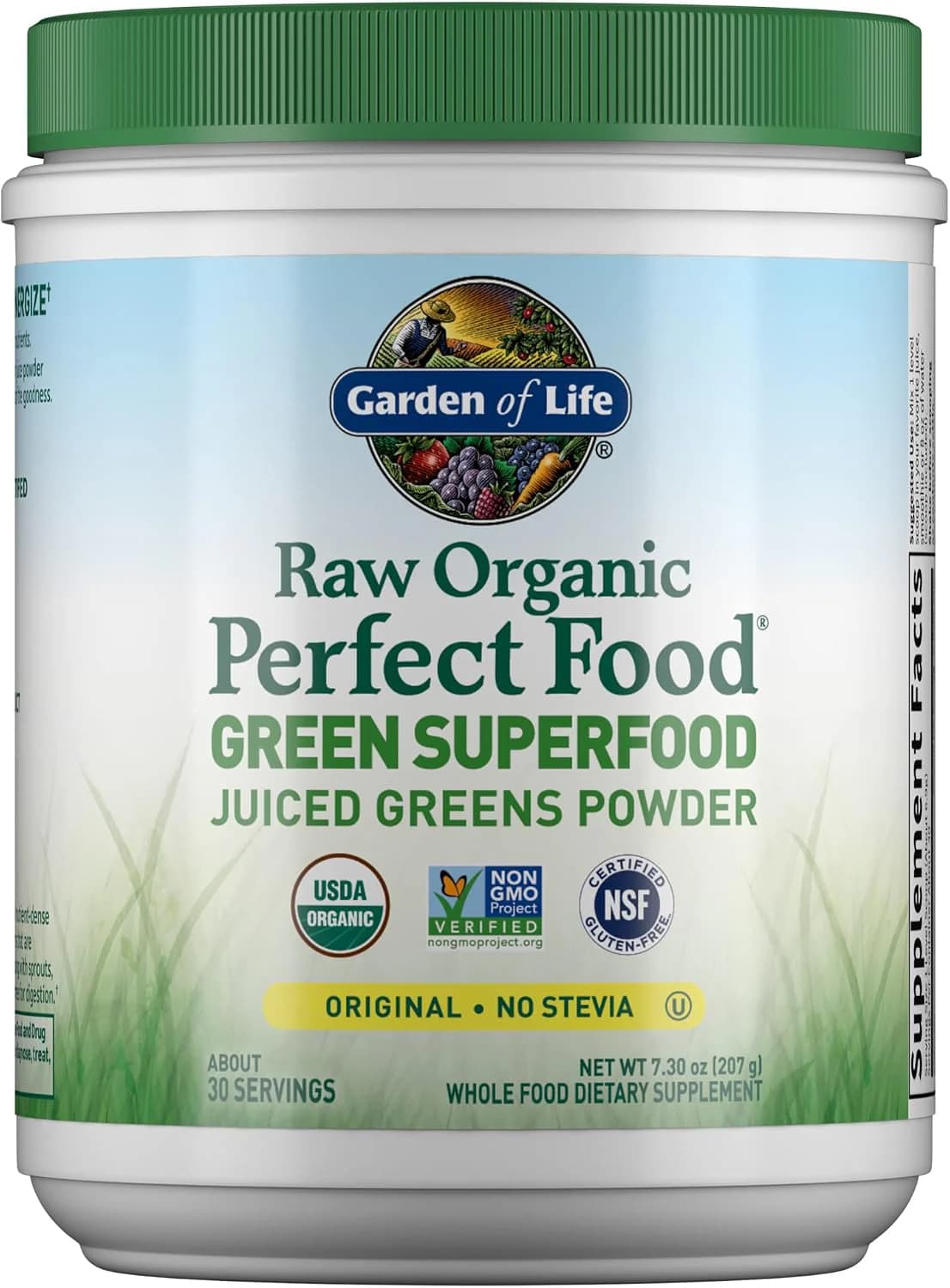
A certified-organic, unsweetened juiced-greens powder with 40 whole-food ingredients and no stevia; clean and affordable, but earthy tasting and dosed in blends.
What's in greens powders, what the limited research shows, why blends and contaminant testing matter, how the cost compares with frozen vegetables, and who might benefit.
Nutrition Reviews Editorial Team · Sep 28, 2026
How creator commissions work, what TikTok and the FTC require, where counterfeit and contamination risks hide, and a 10-minute checklist before you tap 'buy'.
Nutrition Reviews Editorial Team · Sep 28, 2026
Ashwagandha has real trials for stress and sleep, rare but serious liver risks and growing regulatory scrutiny. What extract names mean and which doses were studied.
Nutrition Reviews Editorial Team · Sep 28, 2026