On this page
Key takeaways
- The FDA does not approve or test supplements before sale, so independent certification is the main way to confirm a product matches its label.
- USP Verified and NSF Contents Certified focus on quality: ingredient identity and amount, contaminants and manufacturing practices.
- NSF Certified for Sport, Informed Sport and BSCG screen for substances banned in sport and suit athletes who face drug testing. Informed Choice tests random retail lots rather than every batch.
- A seal only counts if the exact product appears in the certifier's own database, and for batch-tested programs, your lot number should too.
- A certificate of analysis is useful only when it matches your lot, comes from a qualified lab and shows methods, limits and results. Certification still doesn't mean a product is effective or right for you.
A third-party seal is the closest thing supplements have to an independent quality check. But USP, NSF and Informed Sport seals test for different things, and a seal only counts if you can verify it. Below you'll learn what each program actually checks, how to confirm a certification in about two minutes, how to read a certificate of analysis (COA), and where testing stops.
Why third-party testing exists: the DSHEA gap
In the US, dietary supplements are regulated under the Dietary Supplement Health and Education Act of 1994 (DSHEA). Under that framework, the FDA does not have the authority to approve supplements before they are marketed. Companies generally don't have to show the FDA their safety evidence, either before or after launch. The main exception is a product containing a "new dietary ingredient," which requires a safety notification at least 75 days before marketing [1]. As the FDA itself puts it, many supplements can be sold without the agency even being notified [2].
Manufacturers must follow current good manufacturing practices (cGMPs), which are meant to ensure identity, purity, strength and composition [1]. But those rules allow real flexibility. Each dietary ingredient needs at least one identity test, but for other component specifications a manufacturer may rely on a supplier's certificate of analysis once it has qualified that supplier. It may also verify a statistically sampled subset of finished batches rather than every batch [3]. The FDA does not test supplements before they are sold, and its limited lab capacity goes first to emergencies and products that may have caused injury [1].
Independent certification fills part of that gap. It adds an outside organization that audits manufacturing, tests products against published criteria, and controls who can use its mark.
What the evidence shows
The case for testing isn't theoretical:
- Hidden drugs. From 2007 to 2016, FDA warnings identified 776 supplements containing undeclared, unapproved pharmaceutical ingredients. Most were marketed for sexual enhancement (45.5%), weight loss (40.9%) or muscle building (11.9%), and 20.2% contained more than one hidden drug [4].
- Problems persist after recalls. When researchers bought recalled supplements 8 to 52 months after FDA recalls, 18 of 27 (66.7%) still contained banned drugs [5].
- Mislabeling of everyday products. In a sample of 30 immune-support supplements bought online in 2021, 17 had inaccurate labels. Thirteen listed ingredients the lab couldn't detect, and nine contained substances not on the label. None carried a third-party certification seal [6].
- Dose drift. Among 25 melatonin gummies, actual melatonin ranged from 74% to 347% of the labeled amount [7].
- Contamination in sports products. A 2026 systematic review of 44 studies estimated that roughly 9% to 15% of tested supplements contained prohibited substances or unapproved drugs, most often pre-workout, weight-loss and muscle-building products [8].
Bottom line: Risk isn't evenly spread. Weight-loss, sexual-enhancement, muscle-building and pre-workout products are where independent testing matters most.
The major programs, explained
USP Verified
The U.S. Pharmacopeia's mark means the product contains the listed ingredients in the declared strength and amounts, doesn't contain harmful levels of specified contaminants such as heavy metals and pesticides, was made under FDA good manufacturing practices, and will break down and dissolve within a specified time so the ingredients can be absorbed [9]. To earn it, a manufacturer goes through a facility audit against USP's manufacturing chapter and FDA's cGMP rules, a review of its quality documentation, laboratory testing of product samples, and ongoing off-the-shelf testing of verified products [10].
USP Verified is a quality program. Screening for substances banned in sport isn't among the mark's stated criteria [9]. The Department of Defense's Operation Supplement Safety (OPSS) makes the same distinction: of the four certification programs it recommends, one verifies ingredients, amounts and contaminants but does not test for substances banned in sport [11].
NSF: contents certification and Certified for Sport
NSF runs two layers that are easy to confuse:
- Contents Tested and Certified. This is NSF's dietary supplement certification, built on NSF/ANSI 173, the testing standard NSF developed for supplements [12]. NSF evaluates the formula and tests the finished product to confirm it meets its label claims and contains no unsafe levels of contaminants. Testing covers label content, microbiological contaminants and heavy metals, plus residual solvents and pesticides for supplements. There is ongoing annual testing and review of any formula or supplier changes [13]. OPSS notes that NSF/ANSI 173 is the only published standard for third-party certification of dietary supplements [11].
- Certified for Sport. Built on top of contents certification, this program tests production lots for 290 substances banned by major athletic organizations [12][13]. The facility must be GMP certified and is audited "annually or bi-annually" depending on its grade [12]. NSF states that the program is recognized by the US Anti-Doping Agency, Major League Baseball, the National Hockey League and the Canadian Football League [12].
A GMP certificate on its own is not a product certification. In NSF's process, facility GMP certification is only the first step, and product testing comes after it [13].
Informed Sport and Informed Choice
Both programs are run by LGC, an anti-doping laboratory group, and use the same test methods, accredited to the international lab standard ISO/IEC 17025. Each includes a quality review of the product and manufacturing site before certification, and each screens for more than 285 substances banned in sport [14].
- Informed Sport tests every batch before it's released for sale, then adds blind testing of products bought at retail after certification [14].
- Informed Choice is a retail monitoring program. LGC buys products from stores or websites and tests at least 12 random lots a year, so not every batch is guaranteed to be tested [14].
Informed Sport is also candid about the limits of any screen. No testing program can test for every substance prohibited in sport, partly because the World Anti-Doping Agency's list is open-ended. WADA itself does not certify or endorse supplements [15].
BSCG Certified Drug Free
The fourth program OPSS recommends [11]. Its Certified Drug Free program tests every finished product lot, or tests ingredients monthly, for more than 450 banned substances. It adds annual label-claim and contaminant testing and an initial quality-control and GMP review [16].
| Program | Main question it answers | Banned-substance screen | Label and contaminant testing | How often products are tested | Where to verify |
|---|---|---|---|---|---|
| USP Verified | Is it what the label says, made well? | Not in mark criteria [9] | Ingredients and amounts; heavy metals, pesticides; dissolution [9] | Audits plus off-the-shelf testing [10] | USP Product Finder (quality-supplements.org) |
| NSF Contents Certified (NSF/ANSI 173) | Does it match its label, without unsafe contaminants? | Not part of this tier [13] | Label content, microbes, heavy metals, solvents, pesticides [13] | Annual testing and audits [13] | NSF dietary supplement listings [17] |
| NSF Certified for Sport | All of the above, plus safe for drug-tested athletes? | 290 substances [12] | Yes, via contents certification [13] | Production lots tested [13] | nsfsport.com, searchable by lot [18] |
| Informed Sport | Was this batch screened for prohibited substances? | More than 285 substances [14] | Focus is banned substances [14] | Every batch before release, plus blind retail tests [14] | sport.wetestyoutrust.com, by batch [15] |
| Informed Choice | Is this product monitored for banned substances? | More than 285 substances [14] | Focus is banned substances [14] | At least 12 random retail lots a year [14] | choice.wetestyoutrust.com [14] |
| BSCG Certified Drug Free | Is it drug-free for tested athletes? | More than 450 substances [16] | Annual label-claim and contaminant tests [16] | Every finished lot, or ingredients monthly [16] | bscg.org client list [16] |
How to verify a certification in two minutes
- Identify the exact seal. "Third-party tested" or "lab verified" with no named program is a claim, not a certification.
- Go to the certifier's own database, not the brand's website. NSF's Certified for Sport directory can be searched by product name, company name or lot number [18]. NSF also keeps a separate search for products certified to its dietary supplement standard [17]. Informed Sport lets you search by batch number, brand, product name or formulation [15].
- Match the details. Check brand, product name, flavor and size, because certification often applies to specific formulations. For batch-tested programs, confirm your lot number appears. Informed Sport recommends always checking the batch [15].
- Be wary of borrowed credibility. "Made in a GMP-certified facility" describes a facility, not the product [13]. A label saying "approved by WADA" is meaningless, because WADA doesn't certify supplements [15].
Pro tip: Screenshot the database result with the date. Certification status can change over time, and a dated record helps if you later compare lots or report a problem.
Certificates of analysis: what they prove and what they don't
A certificate of analysis is a lab report for a specific lot. Federal cGMP rules give a useful benchmark: when a manufacturer relies on a supplier's COA, the certificate must describe the test methods, the limits and the actual results. The manufacturer must also first qualify the supplier by confirming its results, and re-confirm them periodically [3]. Hold a consumer-facing COA to the same standard.
A credible COA shows:
- The same lot number as your bottle, plus a test or report date.
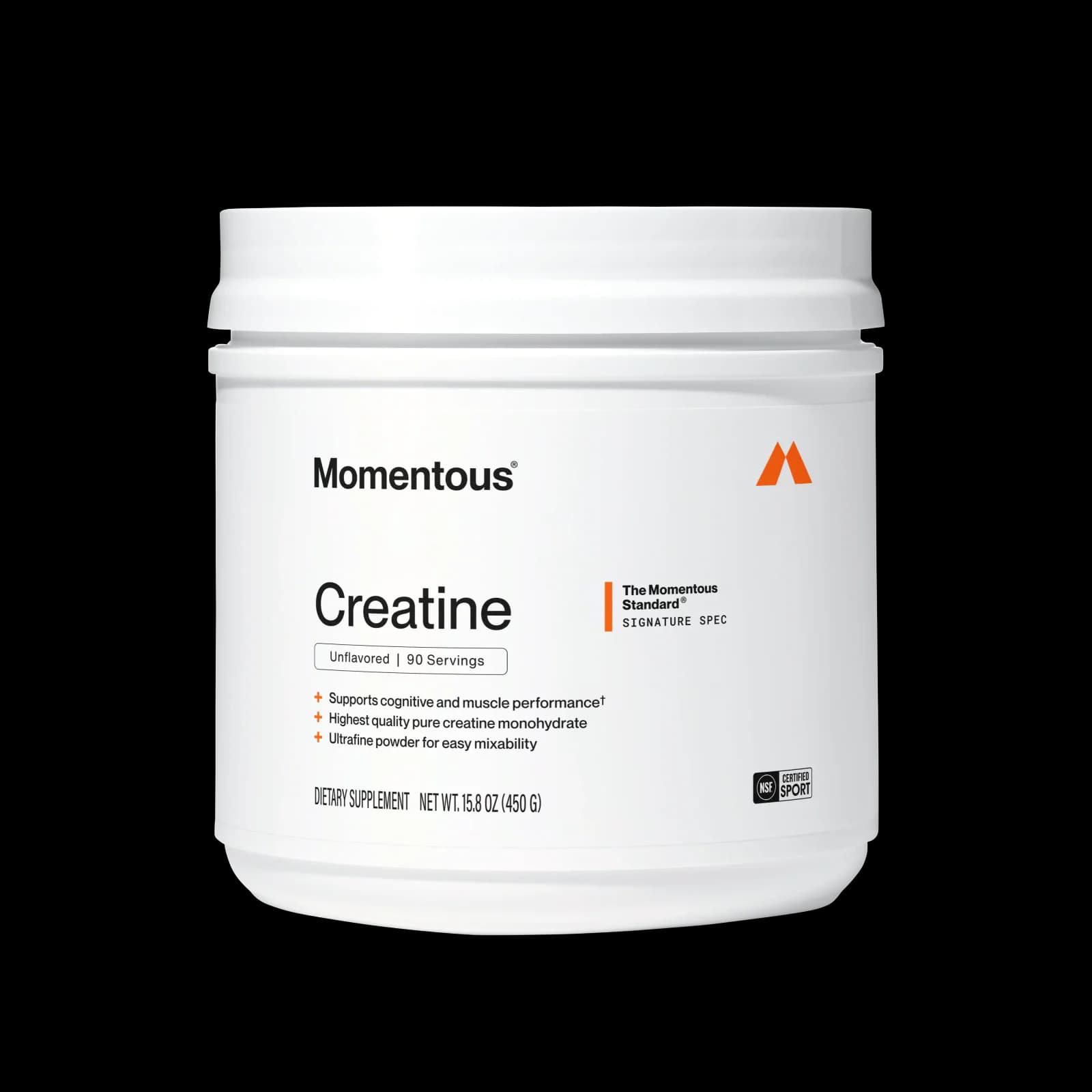
- The lab's name, ideally with ISO/IEC 17025 accreditation, meaning its test procedures have been independently assessed [15].
- Identity and strength results for the key ingredients, compared with the label claim.
- Contaminant results, such as heavy metals (lead, cadmium, arsenic, mercury) and microbiological tests, with units and the limits used.
- For sports products, a banned-substance screen, with the list of what was covered.
- A clear pass or fail against stated specifications, plus a signature or authorization.
The limits of a COA matter just as much. It covers one lot. The brand decides which reports to publish. And a single batch test, with the brand choosing its own sampling and acceptance criteria, can't offer the independent oversight of a certification program [15].
Pro tip: Email the company with the lot number printed on your bottle and ask for that lot's COA. How quickly and completely a brand answers is informative in itself.
What third-party testing can't tell you
- Whether the product works. OPSS stresses that certification means the content matches the label. It does not mean the product has been evaluated for effectiveness or safety [11]. An accurately labeled product with an ineffective dose is still ineffective.
- Whether it's safe for you. Interactions with medications, pregnancy, kidney or liver disease, and allergies all fall outside what a seal covers.
- Everything that could be in it. No program can screen for every substance prohibited in sport, let alone every possible contaminant [15].
- Every batch, in some programs. Retail-monitoring models like Informed Choice test a sample of lots, not all of them [14].
Who should insist on certification
- Athletes and service members subject to drug testing. Use a sport-specific program (NSF Certified for Sport, Informed Sport or BSCG) and verify the lot [11][12][14][16].
- Anyone buying higher-risk categories, meaning weight-loss, sexual-enhancement, muscle-building and pre-workout products, where hidden drugs and contamination concentrate [4][8].
- Online shoppers. In the immune-supplement study above, none of the products bought online carried a certification seal, and more than half were mislabeled [6].
- People who take several supplements daily, since each product is another chance for a quality problem.
Safety: red flags and reporting
Before buying, search the FDA's Health Fraud Product Database, which lists products cited for problems such as hidden drug ingredients. The FDA notes that the list covers only a small fraction of potentially hazardous products [19]. If you suspect a supplement harmed you, stop taking it and report it to the FDA through the Safety Reporting Portal. Reports help the agency spot unsafe products [20]. And because a clean certificate doesn't rule out interactions, check new supplements with your pharmacist or clinician if you take prescription medicines.
The bottom line
Third-party certification is the most practical way to confirm that a supplement contains what its label says and not what it shouldn't. Choose the program that matches your risk: USP Verified or NSF contents certification for everyday quality, and NSF Certified for Sport, Informed Sport or BSCG if you face drug testing. Verify every seal in the certifier's database, down to the lot when the program tests batches. Ask for COAs that match your bottle. Then remember what no seal can do: tell you whether you need the product, whether the dose works, or whether it's safe with your medications.
This article is for general information and isn’t medical advice. Supplements can interact with medications and conditions — talk to a qualified healthcare professional before starting one. Medical disclaimer.
Frequently asked questions
Is 'third-party tested' the same as 'third-party certified'?
Which seal is best?
Does USP Verified screen for substances banned in sport?
Can I trust a certificate of analysis posted on a brand's website?
If a product is certified, is it safe for me?
References
- [1]Questions and Answers on Dietary SupplementsU.S. Food and Drug Administration (content current as of August 2026)
- [2]Is It Really 'FDA Approved'?U.S. Food and Drug Administration (content current as of May 2026)
- [3]21 CFR § 111.75 - What must you do to determine whether specifications are met?Code of Federal Regulations (via Cornell Legal Information Institute)
- [4]Unapproved Pharmaceutical Ingredients Included in Dietary Supplements Associated With US Food and Drug Administration WarningsTucker J, et al. JAMA Network Open (2018)
- [5]Presence of banned drugs in dietary supplements following FDA recallsCohen PA, et al. JAMA (2014)
- [6]Analysis of Select Dietary Supplement Products Marketed to Support or Boost the Immune SystemCrawford C, et al. JAMA Network Open (2022)
- [7]Quantity of Melatonin and CBD in Melatonin Gummies Sold in the USCohen PA, et al. JAMA (2023)
- [8]Systematic review of undeclared prohibited substances and pharmacological adulterants in dietary supplements: prevalence, detection, and risks in sportAl-Saad N, et al. Frontiers in Sports and Active Living (2026)
- [9]How to choose a quality supplementU.S. Pharmacopeia, Quality-Supplements.org
- [10]USP's Dietary Supplement Verification ProgramU.S. Pharmacopeia (USP)
- [11]Why is Third-Party Certification Important for Dietary Supplements?Operation Supplement Safety (OPSS), U.S. Department of Defense
- [12]What Our Mark MeansNSF Certified for Sport
- [13]How to Get Certified: What Does It Take to Be Certified for SportNSF Certified for Sport
- [14]Informed Sport vs Informed Choice: What's the Difference?Informed Sport (LGC)
- [15]Frequently Asked QuestionsInformed Sport (LGC)
- [16]BSCG Certified Drug Free and Certified Quality programsBanned Substances Control Group (BSCG)
- [17]Search for NSF Certified Dietary SupplementsNSF
- [18]Certified Products SearchNSF Certified for Sport
- [19]Health Fraud Product DatabaseU.S. Food and Drug Administration
- [20]How to Report a Problem with Dietary SupplementsU.S. Food and Drug Administration